
Buyer Guide | November 23, 2026
What Makes a Rattan Chair Comfortable for Long-Term Seating?
A comfortable rattan chair should provide good back support, enough sitting space, and a seat that remains comfortable over time.
See Details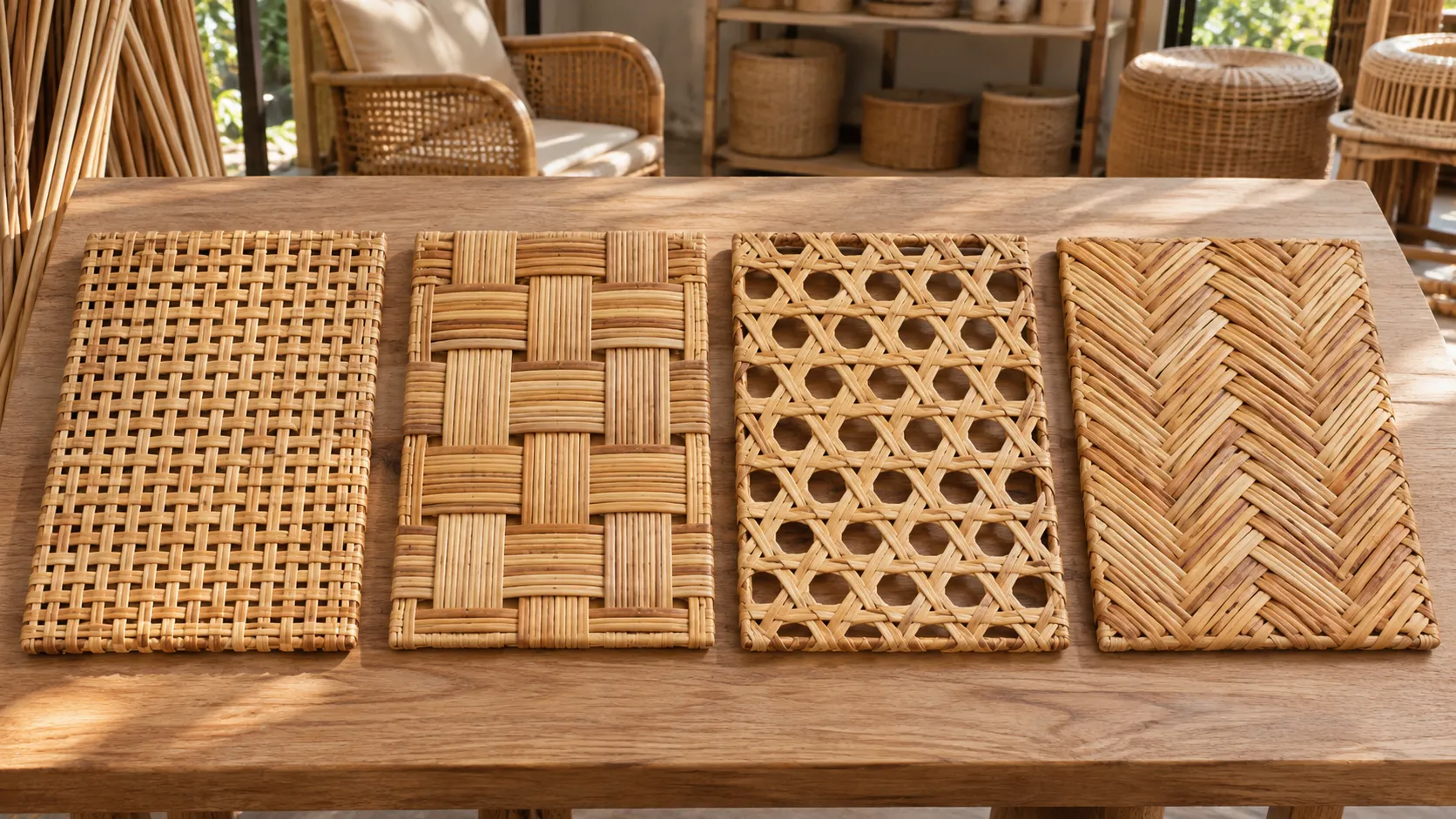
Rattan weaving patterns are created by arranging thin, flexible strands in different directions. Common patterns include plain weave, basket weave, hexagonal cane, and herringbone. Each creates a different appearance, from simple woven grids to open, six-sided designs.
These patterns are used in chair seats, backrests, cabinet doors, headboards, and decorative panels. Some create a more open and lightweight appearance, while others produce a denser surface with less space between the strands.
For furniture buyers and interior designers, understanding these differences makes it easier to choose a suitable pattern and communicate design requirements to manufacturers.
Rattan weaving uses thin strands made from processed rattan, including cane peel and core. The way these strands cross determines the pattern's shape, texture, and appearance.
Several weaving patterns are commonly used in furniture design.
Plain weave is one of the simplest patterns. Each strand passes alternately over and under the strands crossing it, forming a regular woven surface.
Depending on the thickness and spacing of the strands, plain weave can create a relatively open design or a closely woven surface. Its simple appearance makes it suitable for furniture panels, chair backs, and decorative details.
Basket weave uses groups of strands that cross over and under one another, creating a checkerboard-like appearance.
Compared with a simple plain weave, the grouped strands produce larger visual blocks and a more noticeable woven texture. Basket weave is often used for cabinet panels, furniture fronts, and decorative surfaces where the pattern is intended to stand out.
Hexagonal weaving is recognizable by its repeating six-sided openings. It is commonly seen in traditional cane chairs, particularly on seats and backrests.
The pattern is also known as six-way caning because strands are arranged through a series of crossing directions to form the open design.
Its visible openings allow light to pass through, making it a popular choice for furniture that needs a lighter, more open appearance.
Herringbone weaving creates a repeated V-shaped pattern using strands arranged diagonally in alternating directions.
Unlike the straight grid of plain or basket weave, herringbone has a more directional appearance. It is often selected for decorative furniture panels, cabinet fronts, and surfaces where the woven detail is a major part of the design.
Herringbone is also sometimes called fishbone weave. For more information, see What Is Fishbone Weave Rattan?.
Other designs include square-grid, diamond, twill, and customized weaving patterns. Because pattern names can vary between suppliers, photographs or physical samples are often more useful than names alone when selecting a specific design.
Rattan weaving can also be described as open or closed, depending on how much space remains between the strands.
This is different from the pattern name. For example, a plain weave can be made with relatively wide gaps or with strands placed closely together.
Open weaving leaves visible spaces between the strands. Hexagonal cane is a familiar example, with its repeating openings creating a light and airy appearance.
Open weaving is often used for chair backrests, cabinet doors, room dividers, and decorative screens. It works particularly well when designers want a woven surface without completely blocking the view or light behind it.
Closed weaving places the strands closer together, creating a surface with smaller gaps or little visible space.
Depending on the pattern, it can give furniture a more solid appearance and provide greater visual coverage. This makes it useful for cabinet fronts, headboards, and decorative panels where a denser woven surface is preferred.
The difference can also affect everyday maintenance. Open weaving has spaces around its intersections where dust can collect, while tightly woven surfaces may require attention to the narrow gaps between strands.
However, a denser weave is not automatically stronger than an open one. The material, strand thickness, weaving quality, and support underneath all influence how the finished surface performs.
For furniture buyers, the important question is whether the chosen weaving design suits the part of the furniture where it will be used.
Different furniture components place different demands on woven surfaces.
A chair backrest, for example, does not necessarily require the same construction as a woven seat that supports a person's weight.
Hexagonal cane is often used for chair backs because its open pattern creates a lighter appearance. It can also be used for certain chair seats when the material, weaving, and supporting frame are designed for that purpose.
Plain and basket weaves provide more regular woven textures. They can work well for furniture panels, seating designs, and cabinet fronts, depending on how the strands are arranged and supported.
Herringbone is particularly suitable when the woven pattern is intended to become a noticeable design feature. Its diagonal arrangement can add visual interest to cabinet doors, headboards, and decorative inserts.
For interior projects, the degree of openness also affects the appearance of the finished furniture.
A cabinet with open hexagonal cane panels may allow the contents behind the doors to remain partly visible. A more closely woven pattern provides greater visual coverage.
The same consideration applies to room dividers. An open weave can help separate areas without completely blocking the view, while a denser design creates a more enclosed appearance.
For hotel and restaurant furniture, buyers should also think about cleaning access and how frequently the woven surface will be touched or used.
A decorative headboard and a restaurant chair seat may share the same weaving pattern, but their construction requirements can be different.
Rather than choosing a pattern based only on its appearance, buyers should consider where it will be installed, how it will be used, and whether the supporting furniture structure is suitable.
For custom furniture and wholesale orders, selecting a weaving pattern is only the beginning. Buyers should also confirm the details that determine how the finished surface will look.
Two suppliers may offer a product described as hexagonal cane, for example, but use different strand widths and opening sizes. The resulting panels may look noticeably different even though both use the same general pattern.
Providing a reference photograph or physical sample can help avoid this misunderstanding.
Before approving production, buyers should confirm several details:
Weaving pattern: The exact arrangement of strands, supported by a clear visual reference.
Material: Whether the weaving uses natural rattan peel, core, synthetic strands, or another specified material.
Strand width: The size of the strips used to create the pattern.
Opening size: The intended gaps between strands, particularly for open weaving.
Color and finish: The expected appearance, including acceptable natural variations.
Installation method: Whether the weaving is made directly on the furniture frame or installed as a prewoven panel.
The installation method deserves attention because it can affect the appearance and construction of the finished furniture.
Traditional hand-caned chairs may use individual strands woven through holes around the frame. Other designs use prewoven cane sheets fitted into a prepared groove and secured in place. These methods require different frame preparations and should not be assumed to be interchangeable.
For bulk orders, an approved sample provides a useful reference for checking weaving consistency, spacing, color, and edge finishing.
Buyers should also inspect for loose strands, broken weaving, irregular openings, and poorly secured edges. Where the woven surface supports body weight, its attachment and the complete furniture construction require additional attention.
The same weaving pattern can produce different results depending on the material and how it is assembled. Confirming these details before production helps buyers achieve a more consistent appearance across furniture models and larger orders.
Explore Rattan Tradeasia to discover natural rattan furniture and discuss weaving designs for your project.
Buyer Guide | November 23, 2026
A comfortable rattan chair should provide good back support, enough sitting space, and a seat that remains comfortable over time.
See Details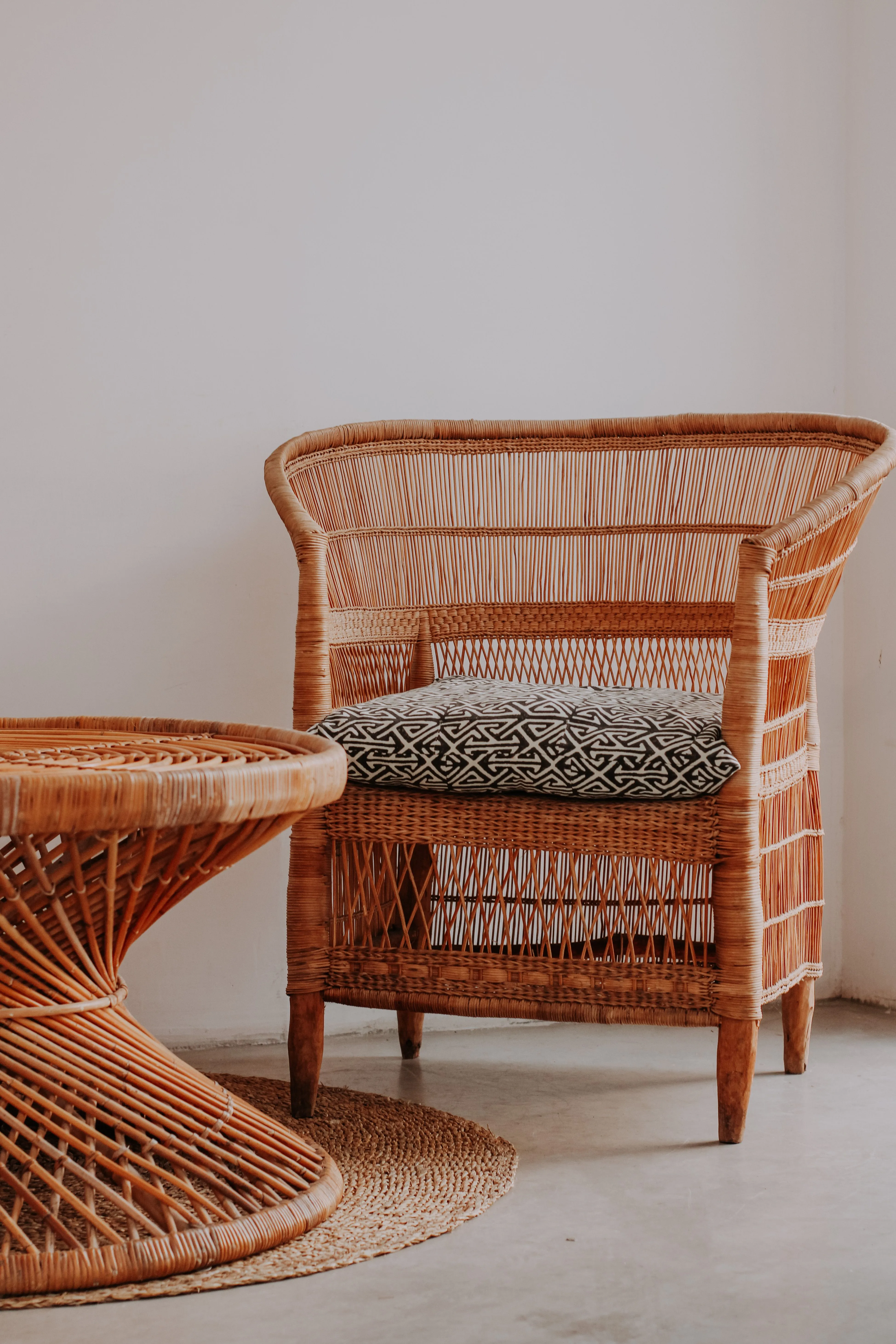
Rattan Guide | November 20, 2026
湾曲した籐家具のフレームは、適切な籐の棒を選択し、熱または蒸気で柔らかくし、型や治具の周りで曲げて必要な形状を達成することによって作られます。
See Details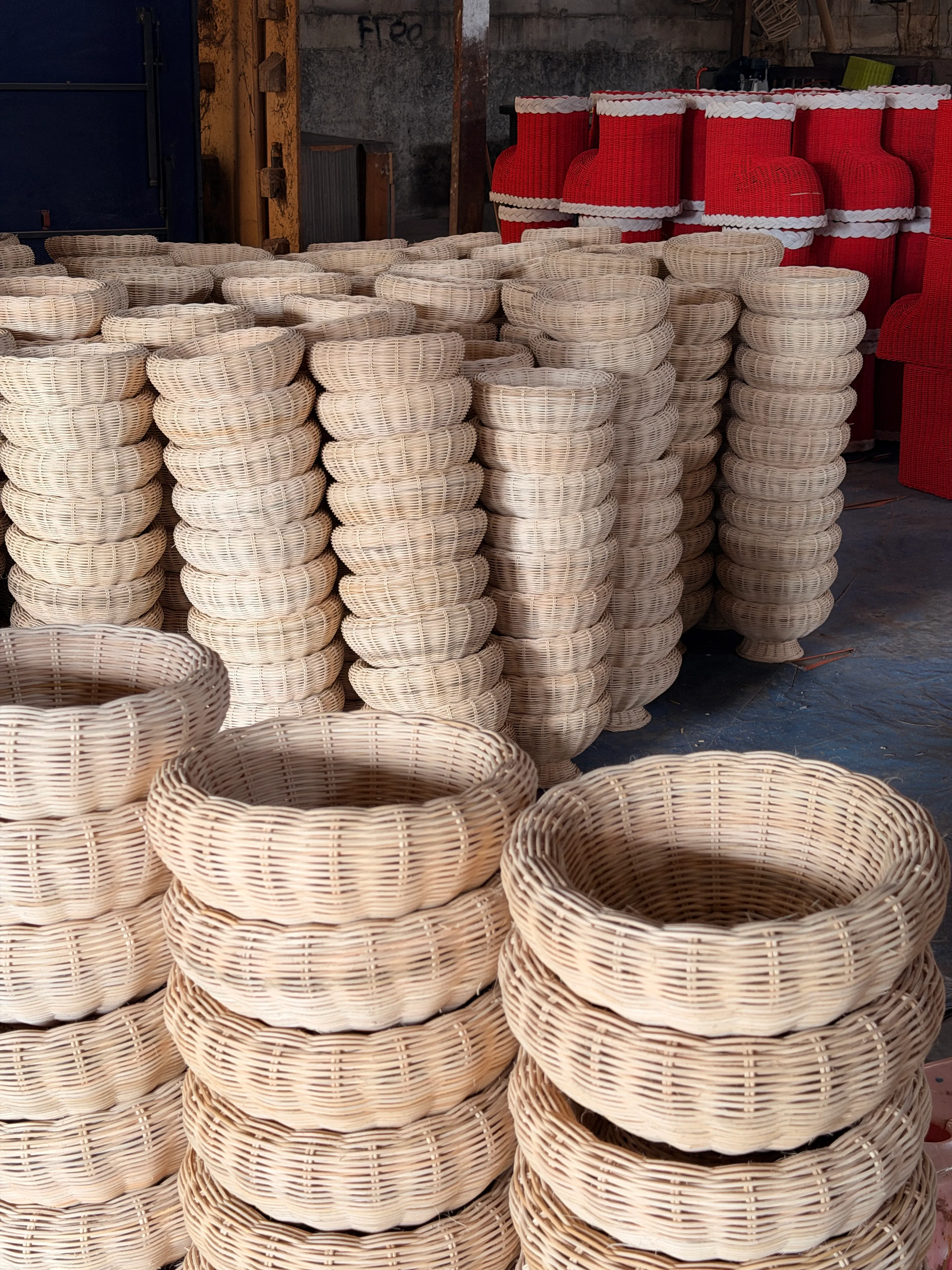
Rattan Guide | November 18, 2026
Not all rattan furniture is made entirely from natural rattan. Some products use natural rattan poles and woven fibers, while others incorporate synthetic strands, timber, metal, or upholstery. The term rattan furniture can therefore describe different material combinations, even when the finished products have similar appearances.
See DetailsSubcribe to our insight newsletter and be the first to receive the latest article and news updates form Tradeasia