
Buyer Guide | November 23, 2026
What Makes a Rattan Chair Comfortable for Long-Term Seating?
A comfortable rattan chair should provide good back support, enough sitting space, and a seat that remains comfortable over time.
See Details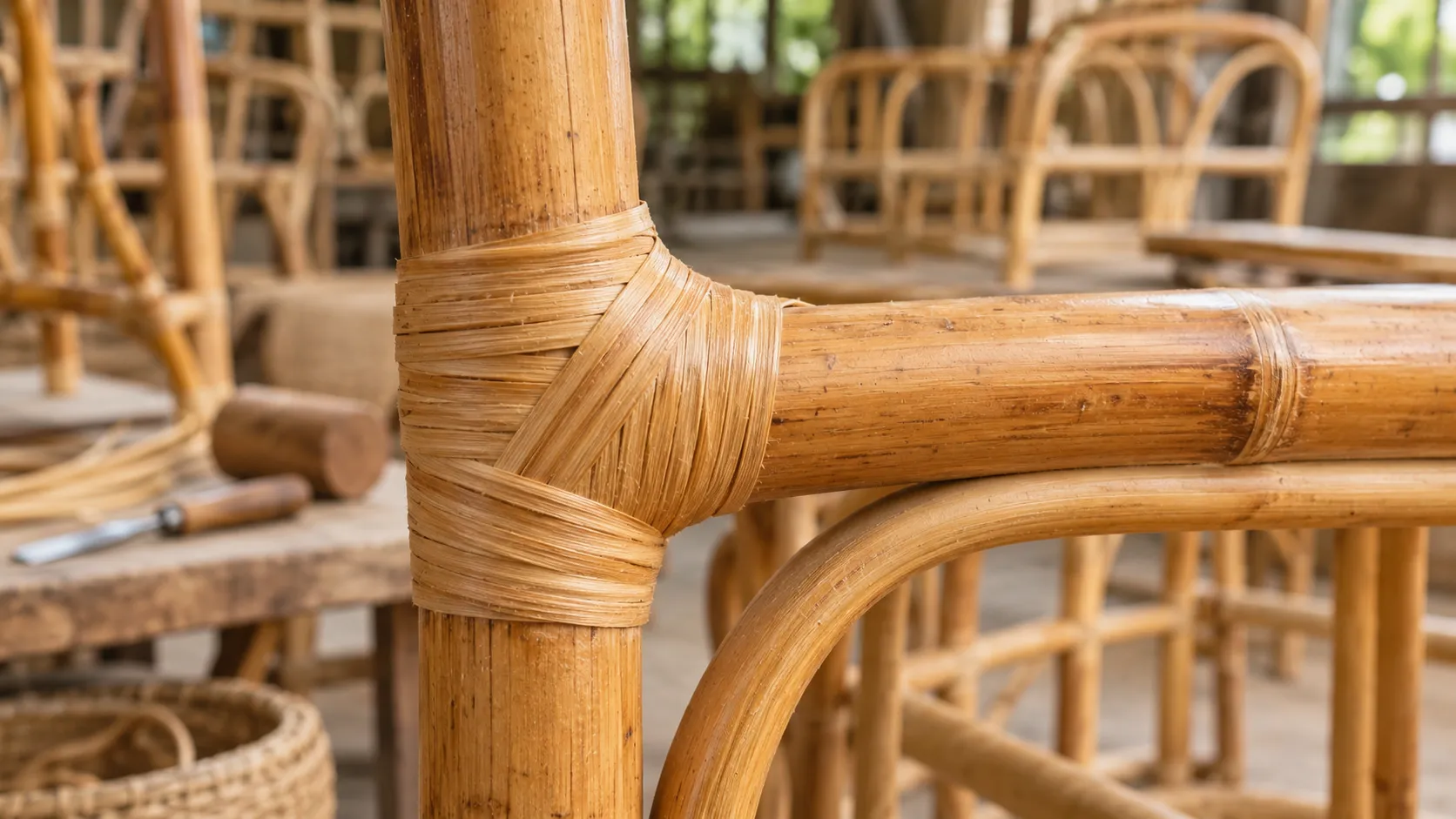
Rattan furniture joints connect the poles and supporting components that form a chair, sofa, or table frame. These connections commonly use fitted pole ends, screws, nails, dowels, and rattan bindings, depending on the furniture design. While the visible wrapping gives natural rattan furniture its characteristic appearance, the underlying joint construction is equally important for frame stability.
Understanding how rattan joints are assembled helps furniture buyers evaluate workmanship, identify suitable construction methods, and review product quality before approving bulk orders.
Natural rattan furniture frames are commonly assembled from whole poles that have been cut, straightened, or bent into the required shapes. Manufacturers connect these components to form chair legs, seat frames, armrests, and backrest structures.
Unlike furniture made from flat timber boards, rattan furniture often uses round poles. Joining these surfaces requires careful preparation so adjoining components fit securely. Manufacturers may shape the end of one pole to match another before securing the connection with mechanical fasteners or dowels.
The completed joint must transfer forces between the frame components while maintaining the furniture's intended shape. A poorly fitted connection can develop movement even when the poles themselves remain in good condition. This makes joint accuracy an important part of furniture construction rather than simply a finishing detail.
One common method is the coped or scribed joint, where the end of a rattan pole is cut into a concave shape that follows the curved surface of another pole. This creates a closer fit between adjoining components before they are secured, often with screws or nails.
Dowel joints provide another connection method. Manufacturers drill corresponding holes into adjoining components and insert dowels, typically with a suitable adhesive, to help secure the assembly. This technique can be used in appropriate frame and seating connections.
Other methods include lap joints, where sections overlap to form a connection. Half-lap arrangements may be used for particular supporting rings or frame components, while cross-lap joints can connect intersecting members. The appropriate method depends on the frame geometry, component dimensions, and intended function.
The Food and Agriculture Organization's rattan manufacturing glossary documents these joint types as established furniture construction methods. Their use does not automatically guarantee strength, since workmanship and the complete frame design remain important.
Rattan peel and core are frequently used to wrap connections after the main frame has been assembled. These materials can conceal fasteners, provide a consistent natural appearance, and, depending on the construction, contribute to securing the joint.
Rattan peel is particularly useful for wrapping because it can be processed into narrow, flexible strips that follow the contours of a connection. The binding may be secured using suitable adhesives or other methods before the furniture receives its final finish.
However, a neatly wrapped joint should not automatically be considered structurally sound. The wrapping can cover screws, nails, or fitted connections beneath it, making the underlying workmanship difficult to assess from photographs alone.
For furniture buyers, this distinction matters because decorative finishing and structural fastening perform related but different functions. The quality of both should be considered when evaluating natural rattan furniture.
Screws and dowels can both be appropriate for rattan furniture, but their suitability depends on the joint design and how the connection transfers loads.
Screws provide mechanical fastening between components and are commonly used when assembling rattan frames. Their effectiveness depends on suitable positioning, component dimensions, and secure installation. Poorly placed fasteners can damage the surrounding material or weaken a connection.
Dowels connect prepared holes in adjoining components and may provide a more concealed joining method. However, their performance depends on accurate drilling, appropriate fit, adhesive selection, and the forces acting on the joint.
Neither method should be considered universally superior. Some furniture designs combine fitted pole ends with mechanical fasteners and protective bindings, while others use different connection arrangements. The appropriate choice is determined by the completed furniture design rather than the fastener type alone.
Rattan chair joints are repeatedly loaded when users sit down, lean against the backrest, or move the furniture. These forces pass through connections between the legs, seat frame, armrests, and other supporting components.
When joints fit properly and remain secure, they help maintain the chair's geometry and stability. Poorly assembled connections may gradually develop gaps, movement, or fastener problems. Repeated stress can also contribute to splitting around vulnerable connection points.
Commercial furniture requires particular attention because chairs in hotels and restaurants may experience frequent use. Buyers should assess the complete frame and request relevant product performance evidence where necessary, rather than assuming that a particular joint type guarantees commercial durability.
Inspecting rattan furniture joints begins with checking whether the frame remains stable and whether adjoining components fit properly. Visible gaps, cracked poles, displaced fasteners, and unusual movement can indicate construction problems.
Buyers should pay particular attention to connections beneath seats, around chair legs, and where backrests join the supporting frame. Wrapped joints should appear consistently finished, without loose ends, sharp edges, or visibly damaged binding materials.
For custom or wholesale orders, suppliers can be asked to provide photographs of the assembled frame before decorative wrapping is applied. This allows buyers to understand the underlying construction that may otherwise be concealed in the completed product.
A representative sample should also be assessed for stability, workmanship, and appropriate performance before bulk production. Clear approval criteria help distinguish acceptable natural material variation from defects that may affect the furniture's function.
Rattan furniture frames rely on accurately fitted connections, suitable fasteners, and carefully applied bindings. Understanding these construction details helps buyers assess quality beyond the finished appearance. Explore Rattan Tradeasia to discover natural rattan furniture and discuss construction specifications for your project.
Buyer Guide | November 23, 2026
A comfortable rattan chair should provide good back support, enough sitting space, and a seat that remains comfortable over time.
See Details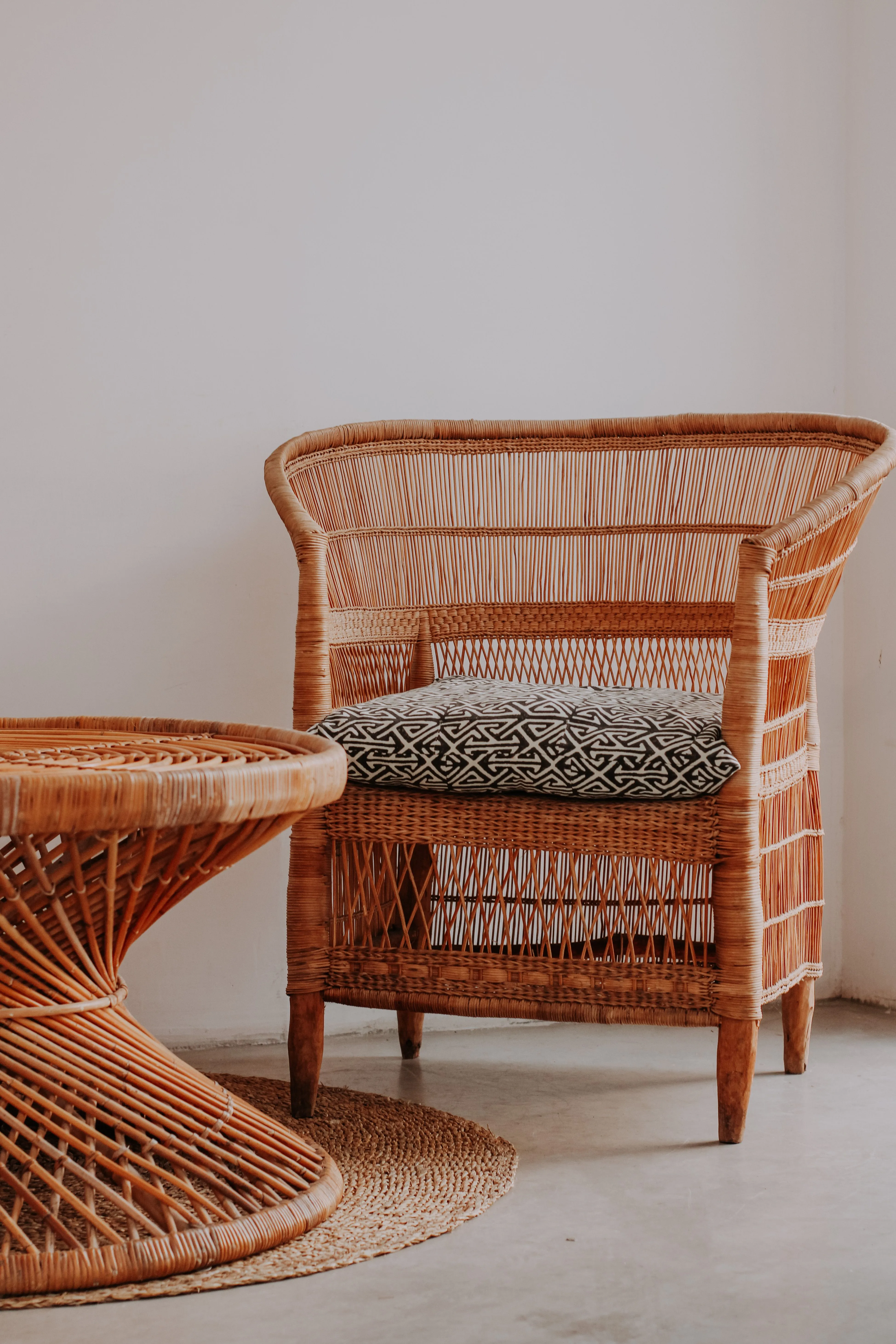
Rattan Guide | November 20, 2026
湾曲した籐家具のフレームは、適切な籐の棒を選択し、熱または蒸気で柔らかくし、型や治具の周りで曲げて必要な形状を達成することによって作られます。
See Details
Rattan Guide | November 18, 2026
Not all rattan furniture is made entirely from natural rattan. Some products use natural rattan poles and woven fibers, while others incorporate synthetic strands, timber, metal, or upholstery. The term rattan furniture can therefore describe different material combinations, even when the finished products have similar appearances.
See DetailsSubcribe to our insight newsletter and be the first to receive the latest article and news updates form Tradeasia