
Buyer Guide | November 23, 2026
What Makes a Rattan Chair Comfortable for Long-Term Seating?
A comfortable rattan chair should provide good back support, enough sitting space, and a seat that remains comfortable over time.
See Details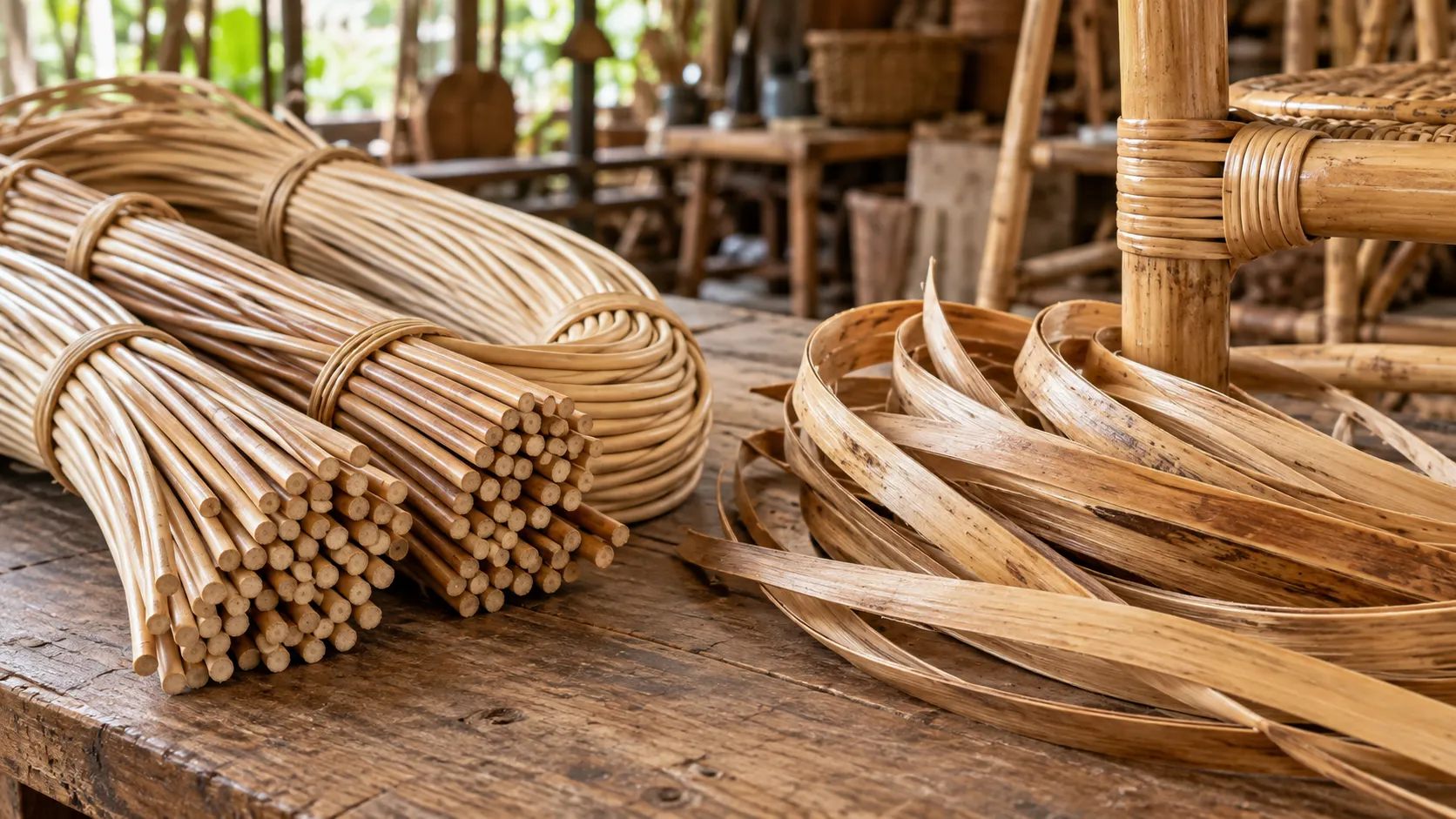
Rattan core and rattan peel are two materials obtained from different parts of the same rattan stem. Rattan core comes from the inner portion and is commonly processed into round or flat strands for weaving, while rattan peel comes from the outer skin and is often used for weaving, joint binding, and decorative wrapping. Although both are natural rattan materials, their shapes, surfaces, and applications differ.
For furniture buyers, understanding these differences helps identify the materials used in woven seats, backrests, and frame connections. It also makes product specifications clearer when comparing furniture designs or supplier quotations.
Rattan core is the inner portion of a rattan stem remaining after its outer skin has been removed. During processing, this material can be cut and shaped into strands of different dimensions, depending on the intended application.
Round rattan core, sometimes called round reed, is commonly used for weaving furniture surfaces, baskets, and decorative products. Flat or oval core is also available for weaving and binding.Processed round core commonly ranges from 2 to 10 mm in diameter, although actual product dimensions depend on the manufacturer and application.
In furniture production, core material is useful for creating woven textures across chair seats, backrests, and decorative panels. Its relatively uniform shape allows manufacturers to develop consistent weaving patterns, while the selected strand dimensions influence the appearance and construction of the finished surface.
Rattan core should not be confused with a whole rattan pole. Although both come from the same plant, a full pole is commonly used for furniture frames, while processed core is generally used for woven components and smaller manufactured products.
Rattan peel is obtained from the outer portion of a rattan stem, including its natural skin. It is commonly processed into flat or slightly curved strips that can be used for weaving, binding, and finishing furniture components.
Unlike inner core, rattan peel retains the characteristics of the stem's outer surface. This often gives it a smoother appearance, making it useful for visible decorative details. Manufacturers frequently use peel to wrap furniture joints, cover connections, and create neatly finished edges.
Rattan peel is also used for woven furniture surfaces, including cane seating and decorative panels. Its application depends on the width, thickness, processing, and weaving method rather than being limited to joint reinforcement.
For buyers, peel may appear as narrow strips wrapped around a chair frame or as part of a woven seat or backrest. Identifying these applications helps distinguish decorative bindings from the materials used in the larger woven surface.
The main difference between rattan core and peel lies in their position within the stem and the form in which they are processed. Core comes from the inner material and can be shaped into round or flat strands, while peel is produced from the outer skin and commonly retains a flat profile.
These differences influence their use in furniture manufacturing. Round core is often selected for woven chair surfaces where the design requires consistent strands and textured patterns. Peel is commonly used for flatter woven details, joint bindings, and decorative wrapping. However, both materials can be processed for weaving, so their functions are not completely separate.
Consider a natural rattan lounge chair with a curved frame and woven backrest. The main structure may use full rattan poles, while round core forms the woven backrest and peel wraps selected frame connections. Other designs may use peel for the woven surface itself, depending on the desired appearance and construction.
This illustrates why a product described simply as "natural rattan furniture" may contain several different forms of rattan. Each component serves a different purpose, and the material selection should follow the furniture design rather than a general preference for core or peel.
Rattan peel comes from the denser outer portion of the stem and is often valued for binding and wrapping applications. Rattan core, meanwhile, provides flexibility and can be processed into different strand shapes for woven furniture. However, these characteristics do not establish that one material will always perform better than the other.
Strength and durability depend on the rattan species, strand dimensions, processing quality, weaving construction, and intended use. A narrow peel strip and a thicker round core strand cannot be compared meaningfully without considering their dimensions and how they are incorporated into the furniture.
For commercial furniture, buyers should therefore assess the completed woven component rather than relying on general material-strength claims. A properly constructed seat or backrest requires suitable support, consistent weaving, secure connections, and workmanship appropriate to its intended function.
The choice between rattan core and peel should begin with the furniture component being specified. Round core may be appropriate for certain woven chair backs, seats, and decorative structures, while peel may be selected for bindings, edge details, and particular weaving styles. Neither material should automatically be treated as the better option for every design.
When reviewing furniture specifications, buyers should confirm whether the product uses round core, flat core, peel, or a combination of materials. Strand dimensions, weaving patterns, finishing requirements, and attachment methods should also be identified. This is especially relevant for bulk orders, where small material differences can affect the appearance and consistency of the finished products.
A representative furniture sample can help buyers evaluate weaving uniformity, visible material defects, joint wrapping, and finish quality before production. For hotel furniture, retail collections, and custom interior projects, these checks help ensure the approved sample reflects the intended materials and construction.
Rattan core and peel come from the same plant but differ in structure and common applications. Core is widely used for woven furniture components, while peel is useful for weaving, binding, and decorative finishing. Understanding their roles helps buyers specify materials more accurately. For projects involving natural rattan furniture, Rattan Tradeasia offers opportunities to explore product options and discuss material and sourcing requirements.
Buyer Guide | November 23, 2026
A comfortable rattan chair should provide good back support, enough sitting space, and a seat that remains comfortable over time.
See Details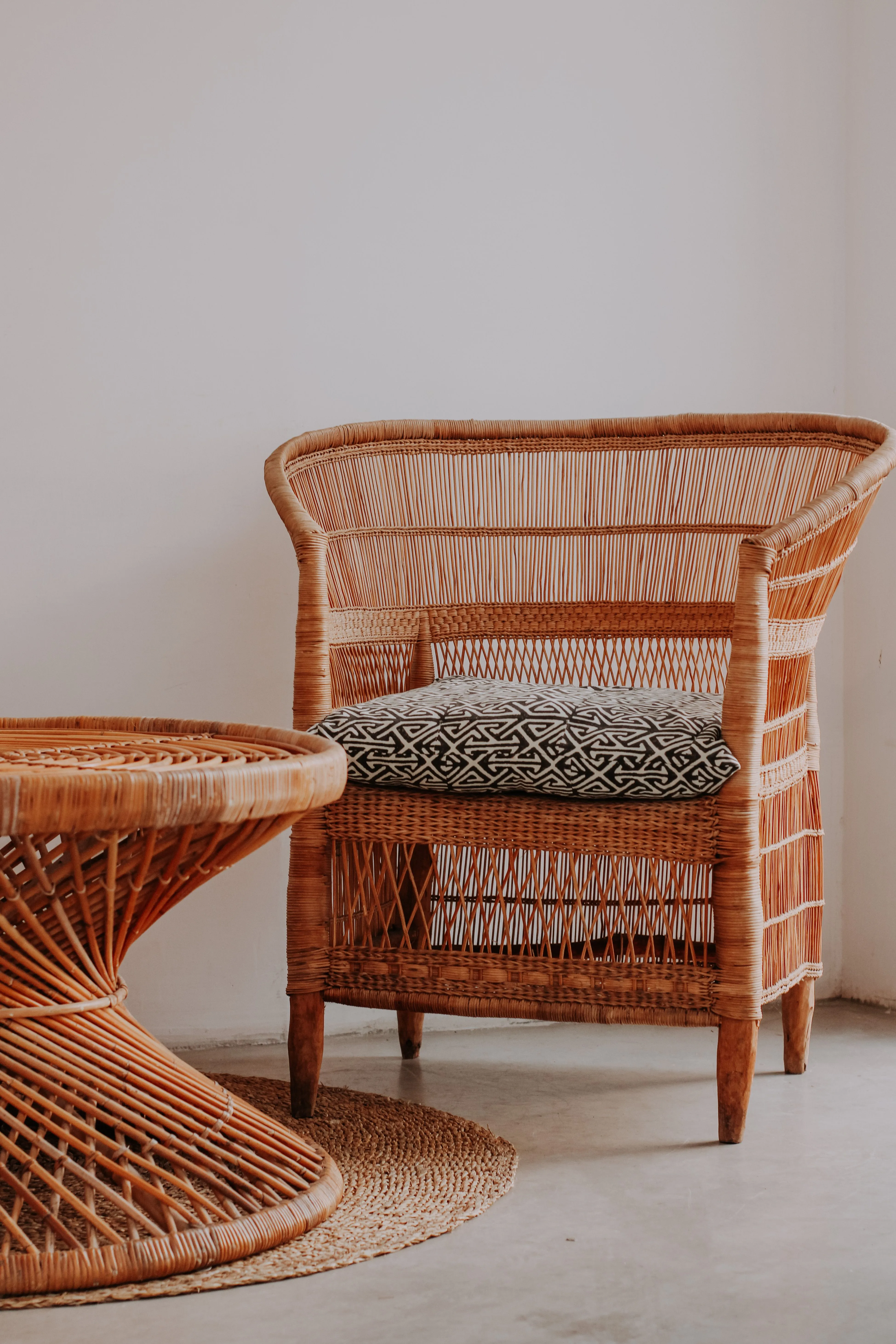
Rattan Guide | November 20, 2026
湾曲した籐家具のフレームは、適切な籐の棒を選択し、熱または蒸気で柔らかくし、型や治具の周りで曲げて必要な形状を達成することによって作られます。
See Details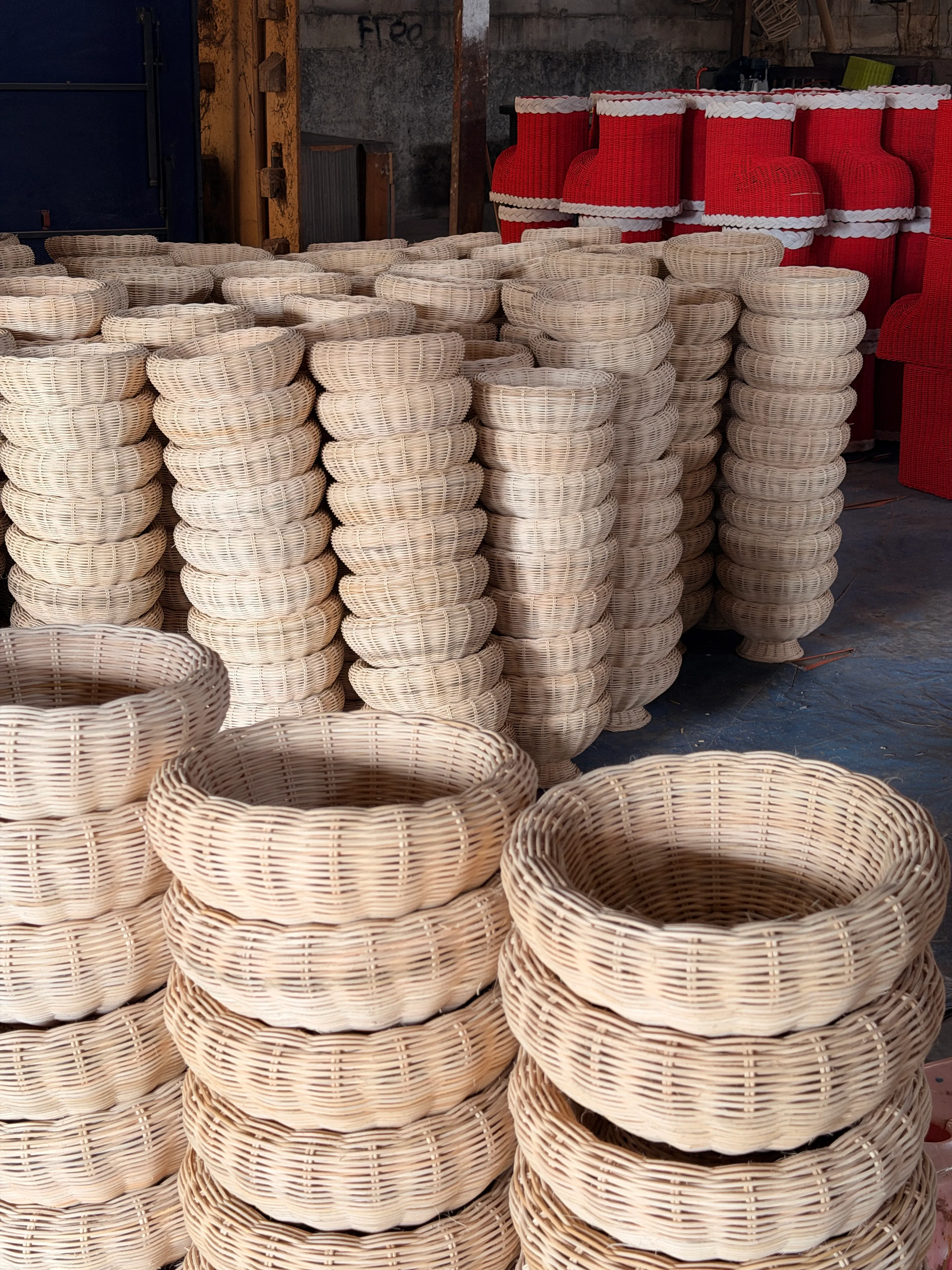
Rattan Guide | November 18, 2026
Not all rattan furniture is made entirely from natural rattan. Some products use natural rattan poles and woven fibers, while others incorporate synthetic strands, timber, metal, or upholstery. The term rattan furniture can therefore describe different material combinations, even when the finished products have similar appearances.
See DetailsSubcribe to our insight newsletter and be the first to receive the latest article and news updates form Tradeasia