Buyer Guide | November 23, 2026
What Makes a Rattan Chair Comfortable for Long-Term Seating?
A comfortable rattan chair should provide good back support, enough sitting space, and a seat that remains comfortable over time.
See Details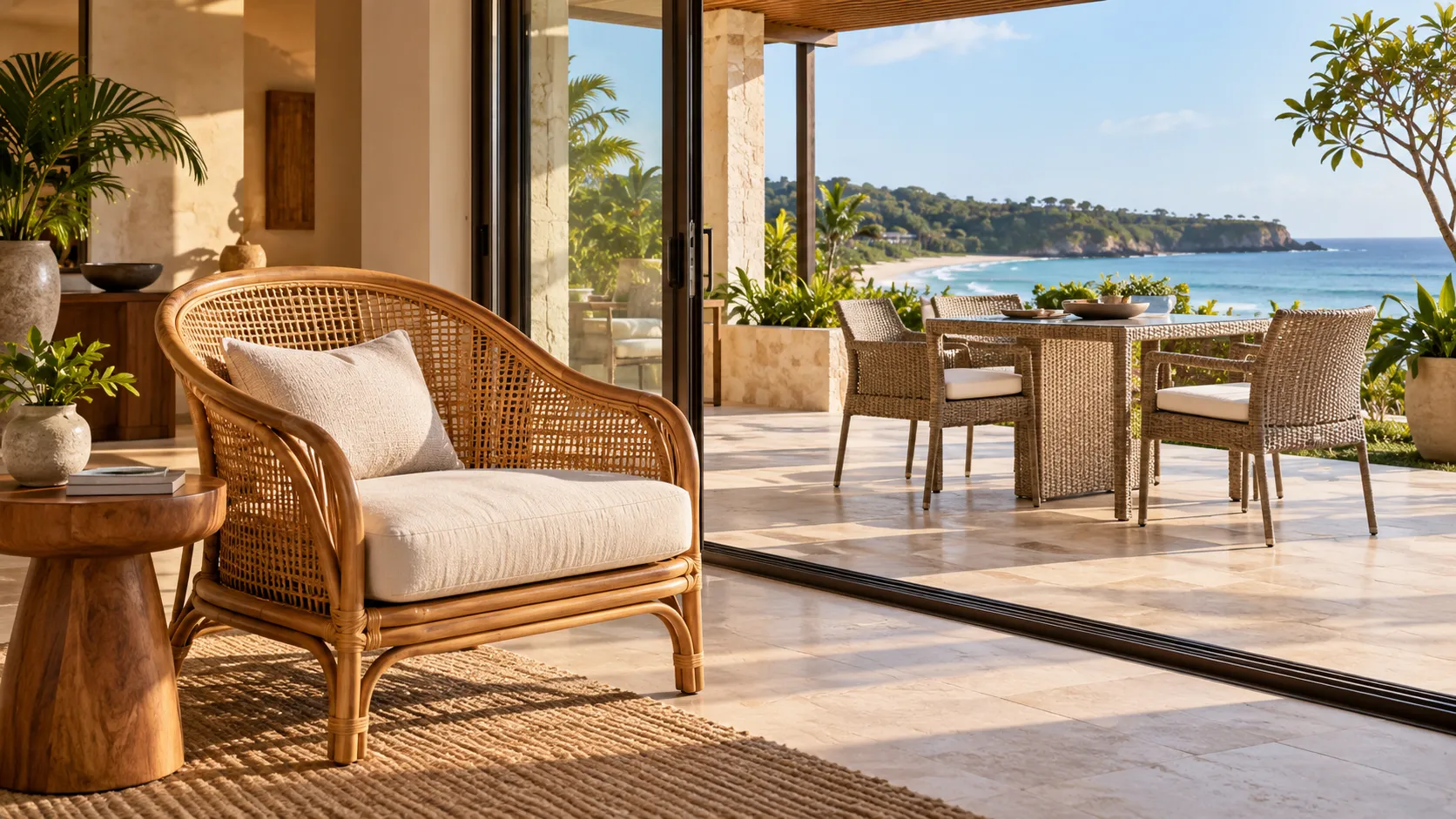
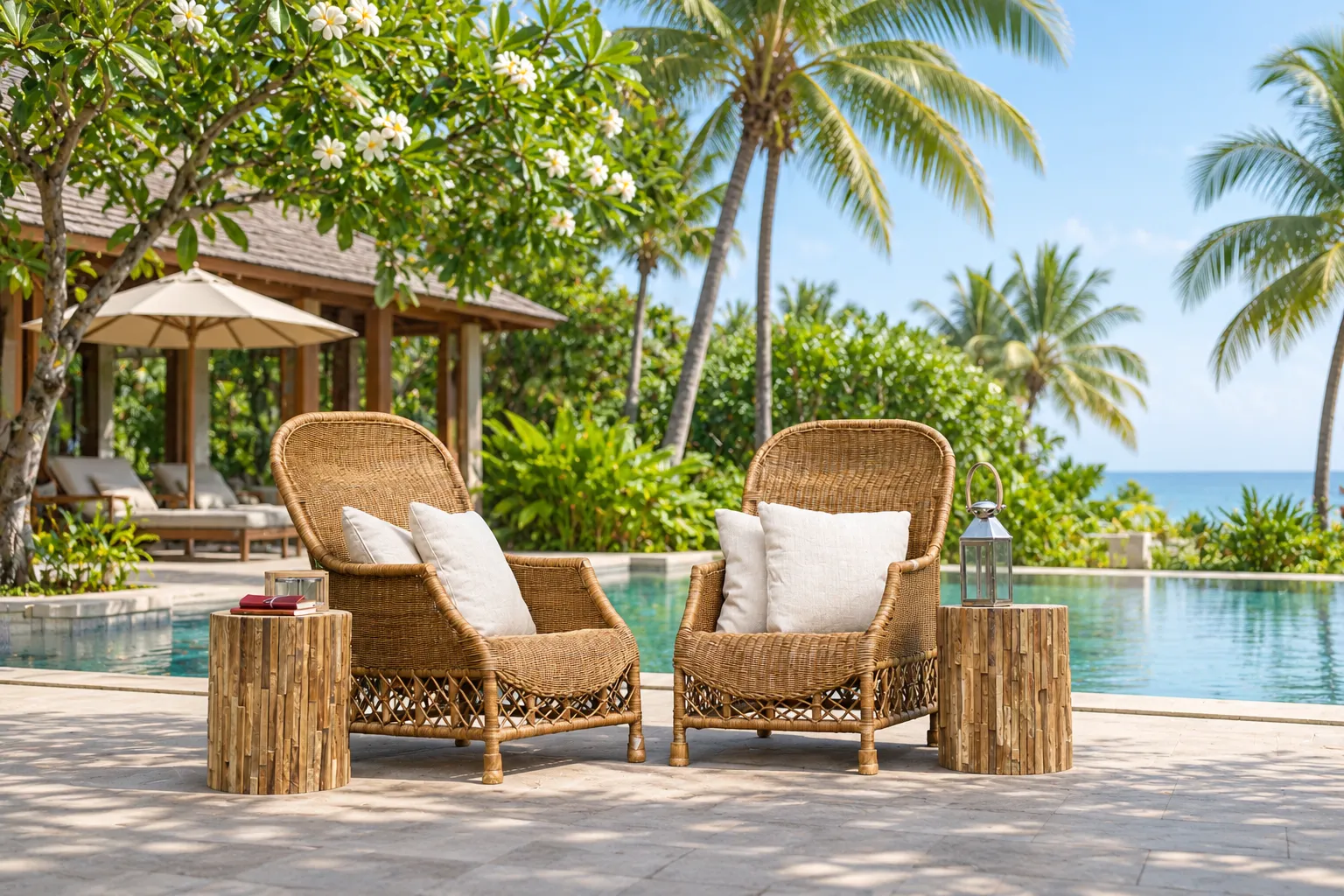
For exposed beachfront hotel areas, synthetic rattan with documented outdoor performance, a corrosion-resistant frame, and suitable hardware is generally the stronger choice. Natural rattan is better reserved for dry guest rooms and protected interiors. On covered terraces, decide according to actual rain, humidity, and sea-spray exposure rather than the presence of a roof alone.
The best rattan for a beach resort is therefore usually a combination of materials across different spaces. An indoor reading chair and an ocean-facing dining chair do not need identical specifications. They do need to match the conditions and workload of their intended locations.
Natural rattan is a plant material used in frames and weaving. Synthetic rattan usually means plastic wicker, often polyethylene, woven around a separate frame. Similar-looking furniture can therefore behave differently outdoors.
Natural rattan brings variation in color and texture and is best considered for dry bedrooms and protected interiors. It generally does not suit prolonged rain or persistent dampness. Cleaning normally involves gentle dust removal and limited moisture, and buyers should confirm that the finished furniture is designed for commercial use.
Outdoor-grade synthetic rattan offers a more controlled woven appearance and can be suitable for exposed terraces. Its performance still depends on the frame, fasteners, and cushions. Approved products may permit washing and rinsing, but buyers should verify the cleaning instructions, outdoor performance, and coastal-use warranty terms.
Salt-air exposure also makes metal components important in both categories. Natural fibers do not rust, and neither does plastic weaving, but susceptible fittings and frames can corrode. Compare the complete construction rather than judging coastal suitability from the visible weave alone.
Neither category guarantees a particular lifespan. Construction quality, cleaning, exposure, and replacement support determine whether the furniture remains useful in service.
Specify outdoor-grade synthetic wicker as the starting point for areas receiving rain, strong sunlight, and sea spray. Request evidence of UV resistance and confirm that the complete chair is suitable for the proposed location.
Synthetic weaving does not automatically make furniture weatherproof. Some products combine synthetic strands with a natural-rattan frame that must remain dry. Others use metal frames whose coating or fittings need particular care near the coast.
For pool decks, tell the supplier about pool-water splashes as well as marine exposure. For balconies and terraces, include the hotel’s procedures for securing or storing furniture during strong winds. Material selection alone cannot address every operating condition.
Natural rattan can be a reasonable choice inside beachfront hotels when the furniture remains dry and its construction suits commercial use. A coastal address alone does not rule it out.
For open-sided restaurants or covered verandas, inspect exposure at furniture level. A roof may block overhead rain while allowing wind-driven spray to reach seats and frames. If conditions routinely become damp, favor a product specified for outdoor exposure.
As a purchasing approach, use coordinated colors and silhouettes across indoor and outdoor collections. The hotel can maintain a consistent design while assigning different materials to different environments.
Read more: Is Natural Rattan Suitable for Hotel Rooms?
Salt air can accelerate corrosion in susceptible metal components. Chlorides can also cause localized attack on stainless steel, so “stainless” should not be treated as a complete coastal specification.
Ask suppliers to identify the frame material, protective finish, fastener material, and recommended maintenance. Powder-coated aluminum is a common outdoor option, but coating quality, damaged areas, and connections still need attention. Request written confirmation of suitability for the hotel’s exposure.
Inspect the sample beneath the seat and around joints. These less-visible areas matter because an intact weave can conceal deterioration elsewhere. Confirm how damaged coatings and replacement fittings should be handled.
Request the weave material and relevant weathering evidence rather than relying on “premium rattan” descriptions. Test documentation should identify the material or product assessed, the method used, and the result. An accelerated test should not be translated casually into a guaranteed number of beachfront service years.
For seating, ask for structural testing appropriate to outdoor commercial use. The EN 581 series provides relevant safety and mechanical testing requirements where applicable to the project. Structural testing does not, by itself, establish salt-air or UV resistance.
Cushions need a separate specification covering fabric, filling, drying, cleaning, and replacement covers. A weather-resistant frame is of limited operational value if cushions remain unusable after rain. Check the complete seating arrangement in a representative hotel location before bulk approval.
Synthetic rattan is often the more practical outdoor option, but it still needs cleaning. Follow the manufacturer’s guidance for removing salt deposits, washing, rinsing, and drying. Coastal exposure can require more frequent care than a sheltered inland location.
Natural rattan usually needs gentler cleaning with limited moisture. Do not apply an outdoor synthetic-wicker washing routine to natural frames or weaving without approval.
Compare quotations using the same intended location and commercial requirements. Include:
Staff time for cleaning, moving, and storing furniture.
Cushion and cover replacement costs.
Repair options for weaving, fittings, and finishes.
Replacement lead times and minimum reorder quantities.
Warranty coverage for commercial and coastal use.
There is no reliable universal cost winner without these details. A lower unit price can lose its advantage if replacement components are unavailable or the care routine exceeds the hotel’s staffing capacity.
Before ordering, obtain written clarification of any coastal exclusions. A general outdoor warranty may contain conditions that materially change the purchasing decision.
For beachfront hotels, specify suitable synthetic rattan for exposed outdoor spaces and consider natural rattan for dry interiors. The deciding evidence is the complete furniture specification: weave, frame, hardware, cushions, testing, and coastal-use coverage. Choose by location first, then compare products against the same requirements instead of treating either material name as a performance guarantee.
To discuss rattan options for your beachfront property, share your furniture schedule with Rattan Tradeasia, including quantities, indoor or outdoor placement, exposure conditions, and delivery timing. Add your requirements for commercial testing, finishes, cushions, and maintenance so the quotation discussion addresses the needs of each hotel area.
Buyer Guide | November 23, 2026
A comfortable rattan chair should provide good back support, enough sitting space, and a seat that remains comfortable over time.
See Details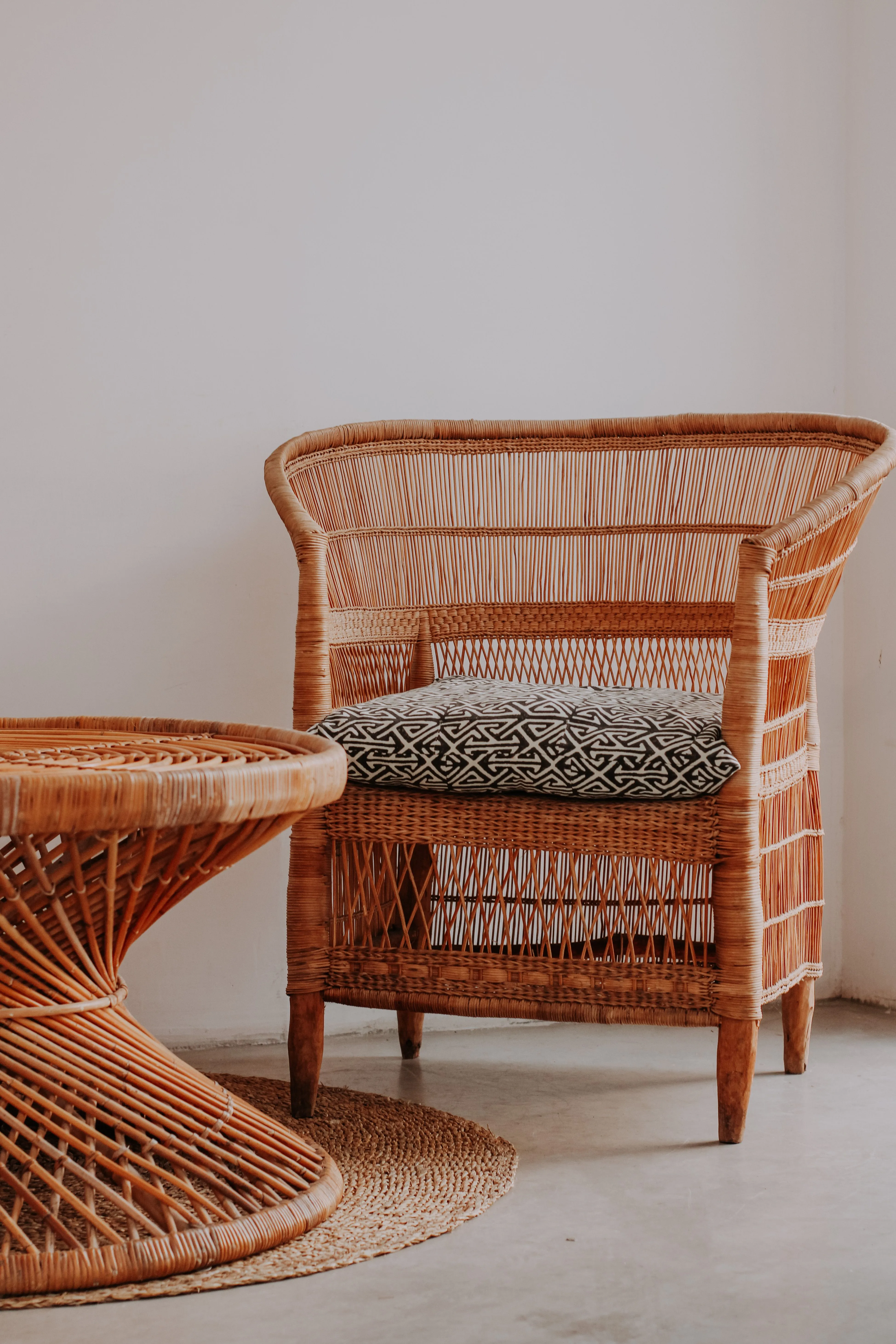
Rattan Guide | November 20, 2026
湾曲した籐家具のフレームは、適切な籐の棒を選択し、熱または蒸気で柔らかくし、型や治具の周りで曲げて必要な形状を達成することによって作られます。
See Details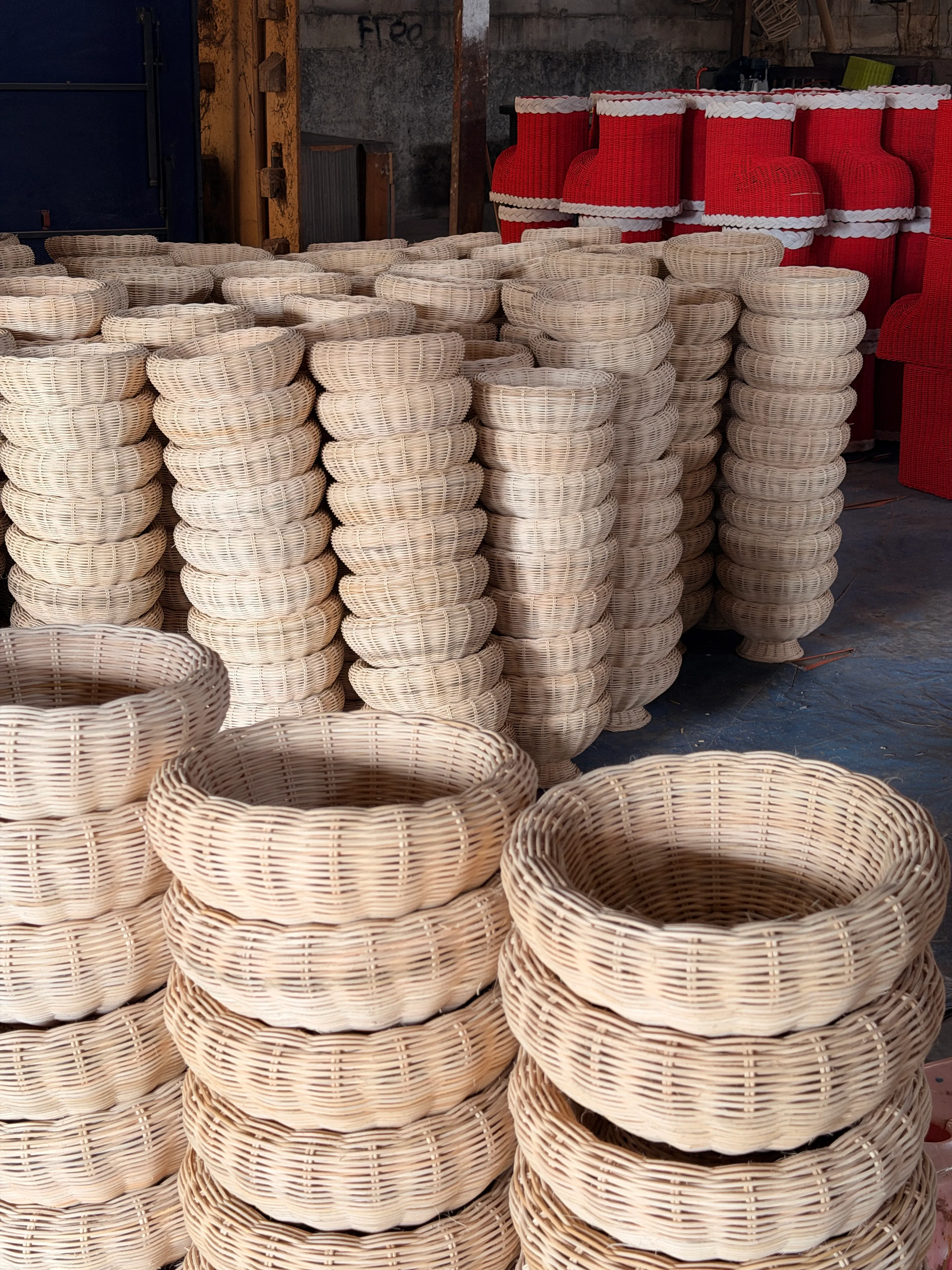
Rattan Guide | November 18, 2026
Not all rattan furniture is made entirely from natural rattan. Some products use natural rattan poles and woven fibers, while others incorporate synthetic strands, timber, metal, or upholstery. The term rattan furniture can therefore describe different material combinations, even when the finished products have similar appearances.
See DetailsSubcribe to our insight newsletter and be the first to receive the latest article and news updates form Tradeasia