Buyer Guide | November 23, 2026
What Makes a Rattan Chair Comfortable for Long-Term Seating?
A comfortable rattan chair should provide good back support, enough sitting space, and a seat that remains comfortable over time.
See Details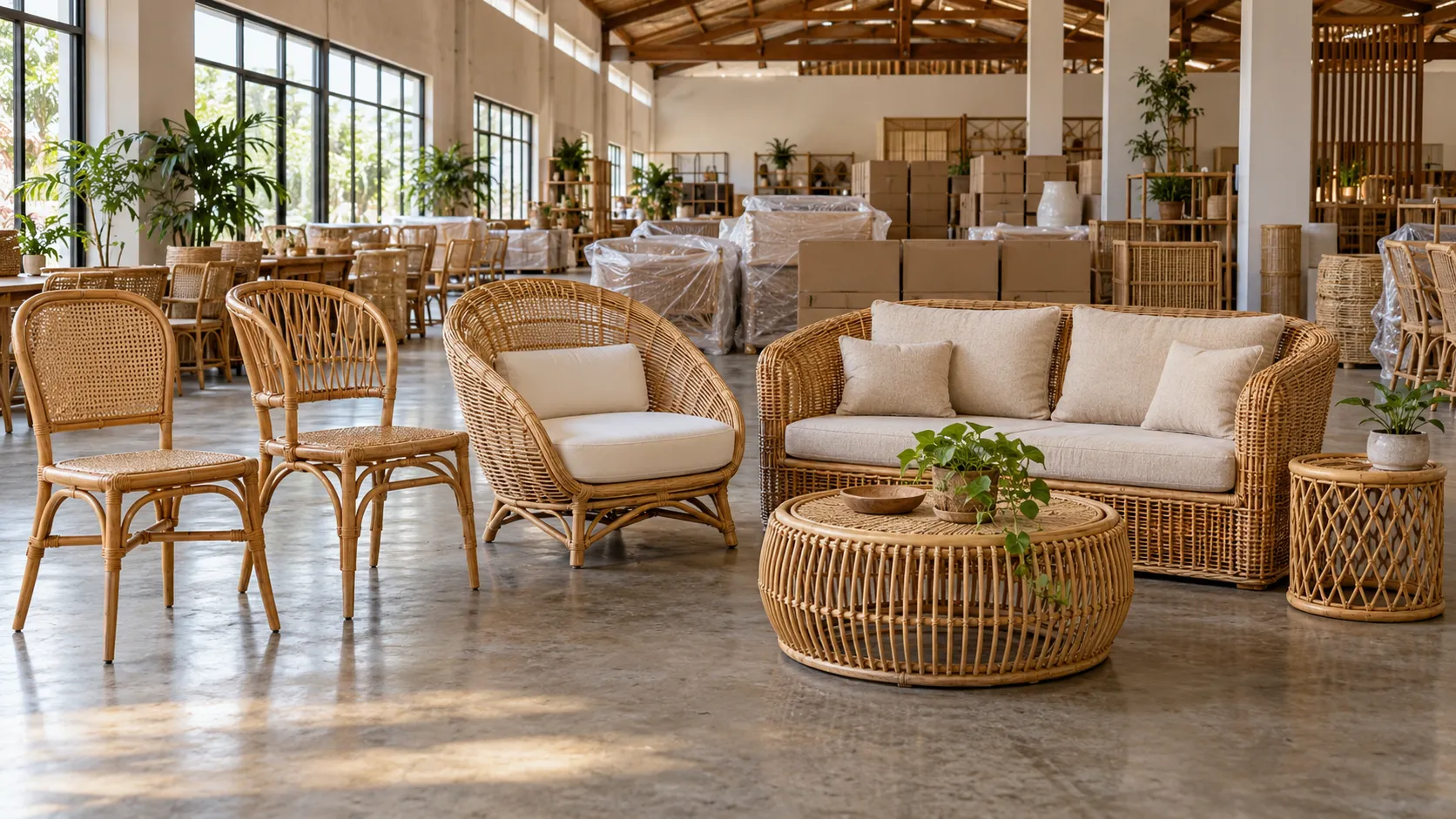
Buyers can often combine different rattan furniture models in a single wholesale order, including chairs, tables, sofas, and decorative furniture. Many Indonesian furniture suppliers accept mixed-model orders, allowing buyers to source multiple designs without purchasing a full container of each product.
However, this flexibility depends on the supplier's minimum order quantity (MOQ), production capabilities, customization requirements, and shipping arrangements. Some manufacturers establish minimum quantities for each model, while others allow buyers to combine products as long as the total order meets a container-volume requirement.
For hospitality buyers, furniture retailers, and importers, understanding these conditions is important when planning a diverse furniture order without creating unnecessary inventory or production costs.
A mixed-model order combines several furniture designs within one purchase arrangement. Instead of ordering only dining chairs, for example, a buyer might include lounge chairs, coffee tables, side tables, and accent furniture.
This approach is particularly useful when furnishing different areas of a commercial property or developing a retail collection.
A hotel may require rattan dining chairs for its restaurant, lounge seating for the lobby, and occasional tables for guest rooms. Purchasing these models together allows the procurement team to coordinate specifications and delivery requirements across the project.
For furniture retailers, mixed orders provide an opportunity to introduce different designs without committing the entire purchasing budget to one model.
However, placing multiple products on one purchase order does not necessarily mean they will be manufactured by the same factory or completed simultaneously. Each product still has its own material requirements, production process, and manufacturing capacity considerations.
The supplier must first confirm which models can be included and how their production and shipment will be coordinated.
Minimum order quantity is often the first limitation buyers encounter when combining furniture models.
Some manufacturers calculate MOQ according to the total order or container volume. Others apply minimum quantities separately to each model, size, or finish.
For example, a supplier might accept a mixed 20-foot container containing several products but still require a minimum quantity for each design. A buyer ordering five different chair models would therefore need to satisfy the applicable production minimum for every model.
Published policies among Indonesian suppliers demonstrate that requirements vary. Some accept mixed containers without fixed per-item minimums, while others specify quantities per design or restrict how many product types can be combined.
These differences often relate to production efficiency.
Even when two chairs use similar materials, different frames, weaving patterns, and dimensions can require separate preparation and assembly work. Very small quantities may therefore be less economical to manufacture.
Before finalizing a product selection, buyers should confirm whether the MOQ applies per model, per color, per variation, or to the overall order.
This distinction prevents a common misunderstanding: meeting the total purchasing quantity does not automatically mean that every selected furniture model qualifies for production.
Read more: What Is MOQ in B2B Furniture Sourcing?
Mixing existing catalog products is generally more straightforward than combining several newly developed designs.
Standard furniture models already have established dimensions, construction methods, and material requirements. Manufacturers may also have previous production experience that helps them estimate costs and lead times more accurately.
Custom furniture introduces additional considerations.
A buyer requesting a modified rattan dining chair, for example, may need a different frame dimension, weaving pattern, cushion specification, or surface finish. These changes can require technical review and sample approval before production begins.
When several customized models are included in one order, each design may need separate confirmation.
This does not mean mixed orders cannot include custom furniture. It means the supplier must evaluate the production requirements of each design rather than treating the entire order as one standard product.
Buyers can sometimes simplify production by using common materials, finishes, or construction details across multiple models.
For example, a coordinated collection of dining chairs, lounge chairs, and side tables using the same rattan finish may require fewer separate finishing arrangements than a collection using several unrelated colors.
Standardization can improve coordination while preserving differences in furniture design.
A mixed rattan furniture order does not necessarily receive the same unit pricing as an order concentrated on one model.
Manufacturing costs depend partly on production quantity. Producing a larger batch of identical chairs may allow a workshop to organize materials, labor, and finishing more efficiently.
Dividing the same total quantity among several designs can reduce those efficiencies.
For example, an order containing 100 identical dining chairs may have a different cost structure from an order containing 20 pieces each of five different models.
The total quantity is identical, but production preparation, material requirements, and packing arrangements may differ.
Custom specifications can create further differences, particularly when models require separate finishes, upholstery, or construction methods.
For buyers, the relevant comparison is therefore not simply the total number of pieces ordered.
It is the unit price of each model at its proposed quantity, together with the cost of preparing, packing, and delivering the complete order.
A mixed order can still be commercially attractive when the additional product variety serves a clear business purpose.
Different furniture models do not always require the same production time.
A standard chair with an established construction method may be completed sooner than a customized lounge chair requiring new dimensions, detailed weaving, or specialized upholstery.
This becomes important when several products are planned for one shipment.
If one model is completed later than the others, the buyer may need to wait until the entire order is ready before arranging consolidated delivery.
The production schedule should therefore account for the most time-consuming product, not simply the average manufacturing time.
Sample approval also affects scheduling. Custom models should have their construction, dimensions, materials, and finishes confirmed before bulk production is released.
For hospitality projects with fixed installation dates, buyers should request a production plan showing the expected completion of each model and the proposed shipment date.
This helps prevent situations where most of the furniture is ready, but one outstanding model delays the complete delivery.
Container capacity is another important consideration when mixing furniture models.
Furniture dimensions vary significantly, and the number of products that fit inside a container depends on their packed size rather than their individual selling price or product count.
A bulky lounge chair may occupy substantially more space than a dining chair. Tables may require protective packaging or partial disassembly, while certain chair designs can be stacked or nested.
Consequently, a container holding several furniture categories needs a different loading arrangement from one containing identical products.
Suppliers commonly calculate shipping volume in cubic meters (CBM), using the packed dimensions of each product.
However, the combined CBM is only part of the calculation. Carton orientation, stacking limitations, weight distribution, and protection against movement also affect how efficiently furniture can be loaded.
Buyers should request a packing list and proposed container-loading plan before confirming the final quantities.
A mixed order should be evaluated according to both its manufacturing feasibility and its practical shipping volume.
Not every manufacturer produces every type of rattan furniture.
One workshop may specialize in dining chairs, while another focuses on lounge seating, tables, or decorative accessories. A buyer developing a broad collection may therefore need products from several manufacturers.
Combining these products into one purchasing program is possible, but it introduces additional coordination.
The buyer must consider whether products can be delivered to a common consolidation location, inspected before loading, and prepared for the same shipment.
Different suppliers may also use different finishing techniques or material grades. Even when they agree to the same nominal rattan color, the final appearance may vary between factories.
For coordinated hospitality collections, common finish references and approved samples become particularly important.
Clear responsibility for quality inspection, packing, export documentation, and shipment scheduling is also necessary.
A consolidated shipment can reduce the need to manage several separate international deliveries, but the benefits depend on effective coordination before the furniture reaches the loading stage.
Before requesting a final quotation, buyers should prepare a product list that identifies each furniture model and its purchasing requirements.
The information should include:
Product identification: Model name, product code, or reference image.
Quantity per model: Required pieces for each design, including size or finish variations.
Specifications: Dimensions, materials, weaving patterns, finishes, and upholstery requirements.
MOQ confirmation: Whether minimum quantities apply per model, variation, or total order.
Sample approval: Required samples or technical confirmations for customized products.
Production schedule: Expected completion dates and the intended shipment window.
Packing and shipment: Packed dimensions, estimated CBM, destination, and preferred shipping terms.
This information helps suppliers assess whether the proposed combination can be manufactured and shipped under one order.
It also allows buyers to identify possible adjustments before committing to production.
For example, reducing the number of finish variations or increasing quantities of selected models may make an otherwise impractical mixed order more feasible.
Combining different rattan furniture models in one order can help buyers develop coordinated collections, furnish multiple commercial spaces, and manage purchasing quantities more effectively. However, a successful mixed order depends on understanding per-model minimum quantities, production requirements, pricing, and container capacity before confirming the purchase. For hospitality buyers, furniture importers, and wholesalers, Rattan Tradeasia provides a practical sourcing solution by helping buyers explore different rattan furniture models, identify suitable manufacturing partners, and coordinate product specifications and order requirements. Whether sourcing dining chairs, lounge furniture, tables, or customized designs, buyers can work with Rattan Tradeasia to develop a product mix that aligns with their furniture needs and purchasing plans.
Buyer Guide | November 23, 2026
A comfortable rattan chair should provide good back support, enough sitting space, and a seat that remains comfortable over time.
See Details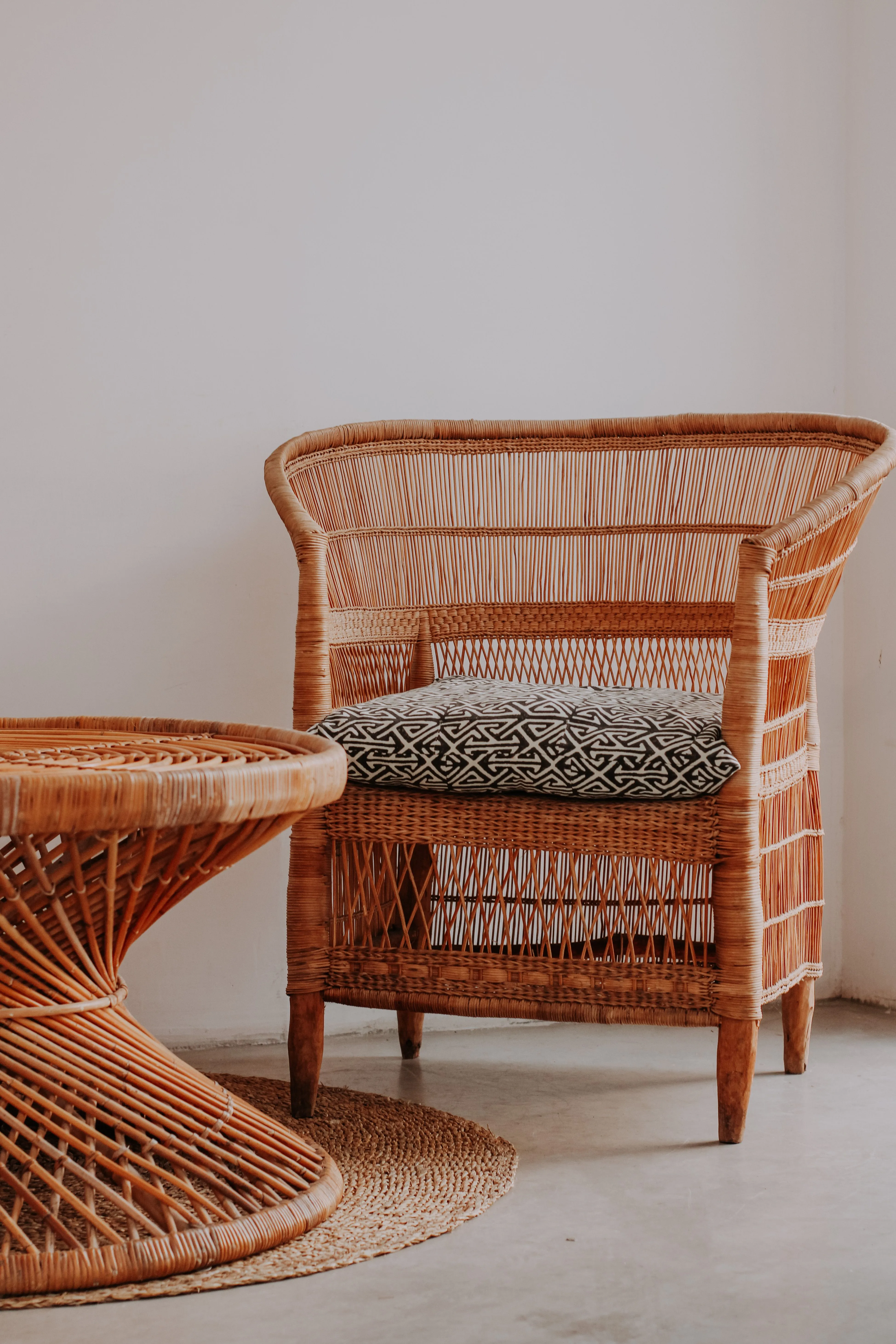
Rattan Guide | November 20, 2026
湾曲した籐家具のフレームは、適切な籐の棒を選択し、熱または蒸気で柔らかくし、型や治具の周りで曲げて必要な形状を達成することによって作られます。
See Details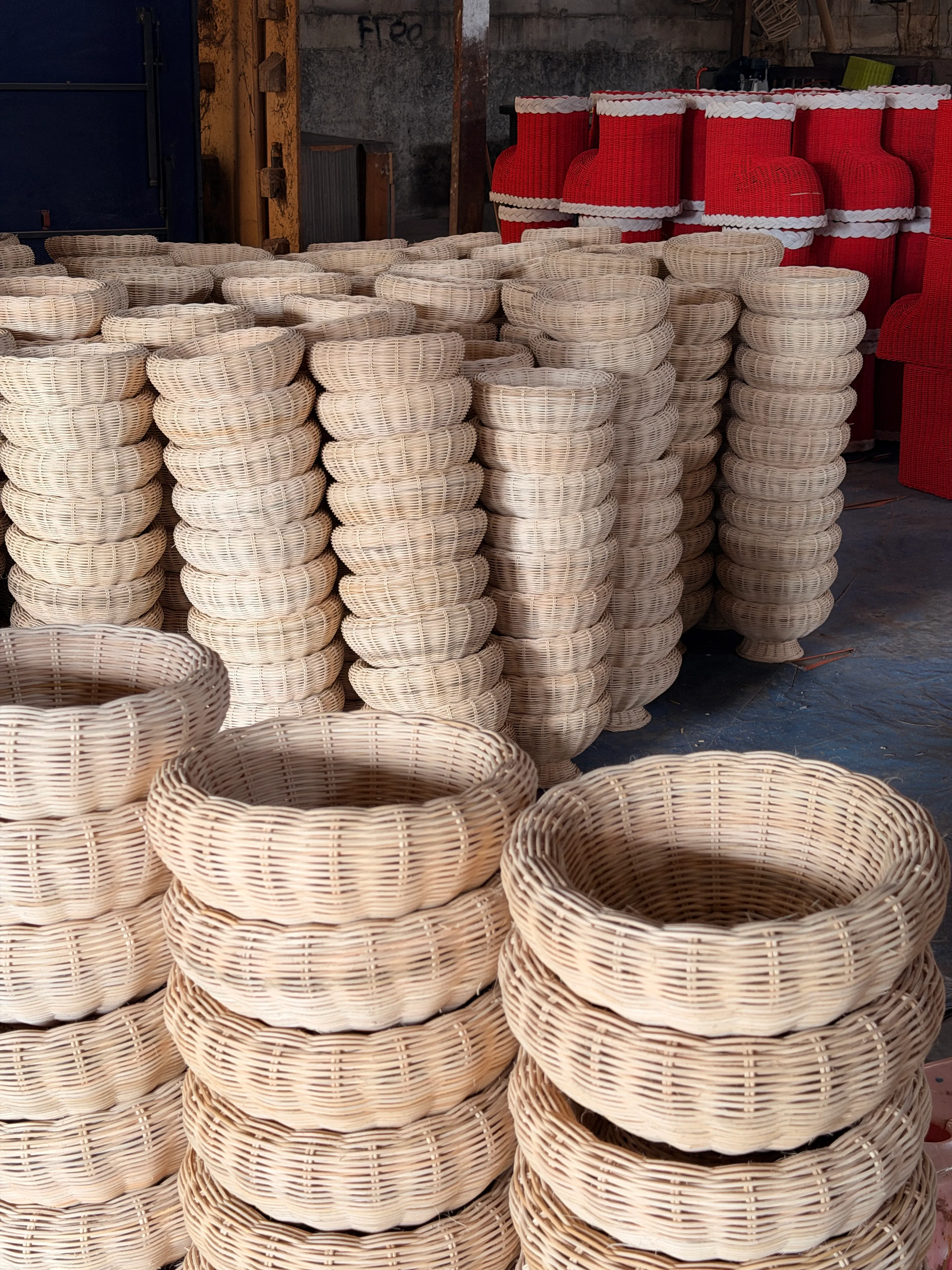
Rattan Guide | November 18, 2026
Not all rattan furniture is made entirely from natural rattan. Some products use natural rattan poles and woven fibers, while others incorporate synthetic strands, timber, metal, or upholstery. The term rattan furniture can therefore describe different material combinations, even when the finished products have similar appearances.
See DetailsSubcribe to our insight newsletter and be the first to receive the latest article and news updates form Tradeasia