Buyer Guide | November 23, 2026
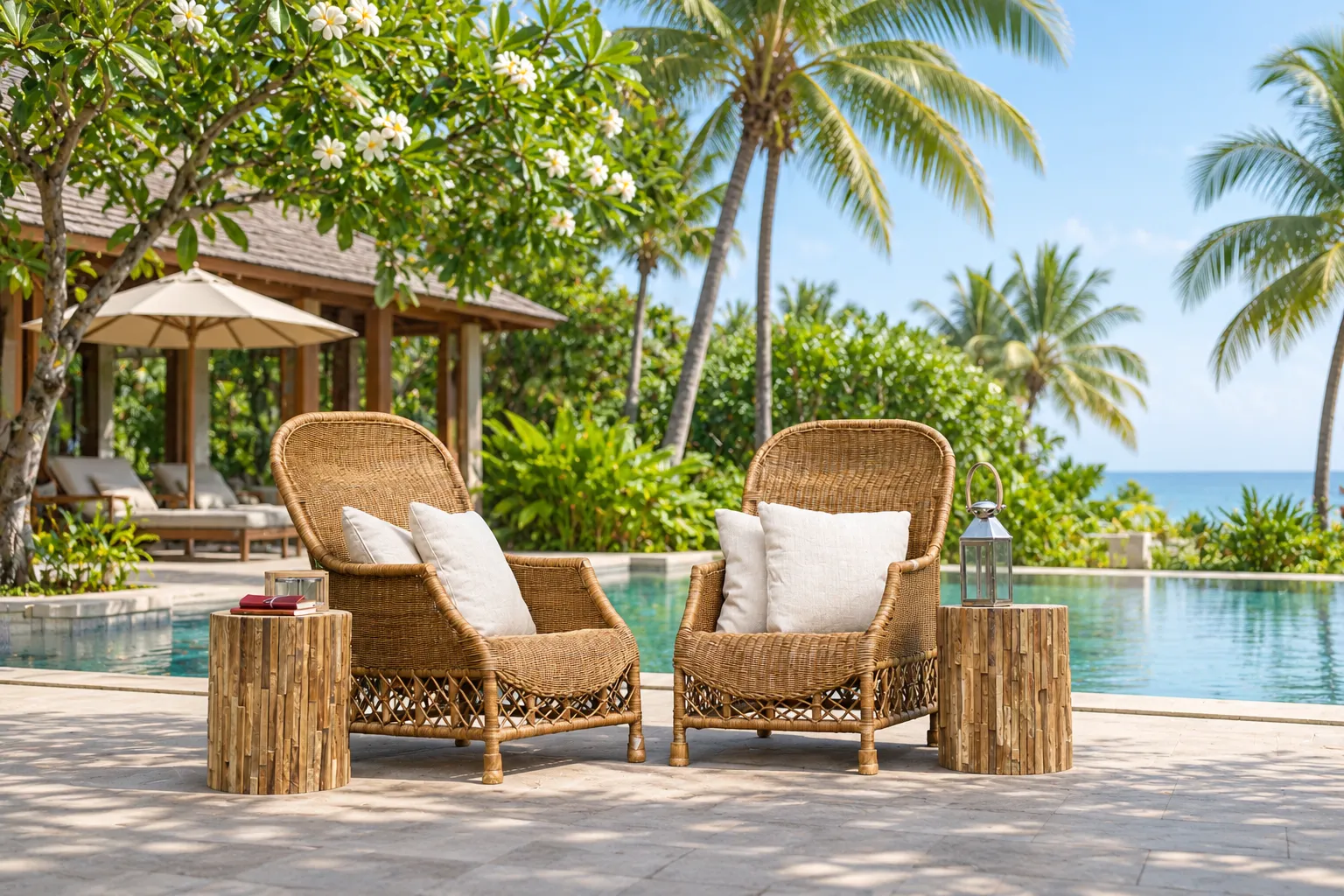
What Makes a Rattan Chair Comfortable for Long-Term Seating?
A comfortable rattan chair should provide good back support, enough sitting space, and a seat that remains comfortable over time.
See Details
Natural colored rattan is rattan left in the golden, honey-to-tan tone it develops during processing, rather than stained, painted, or bleached to a different shade. That tone is produced by how the harvested cane is cured and dried, so "natural" describes an unaltered finish, not an unprocessed material. It generally holds its color well indoors, though like any natural rattan, it can shift or fade with heavy sun exposure over time.
It's easy to assume rattan is simply harvested and used as-is, but the tan-gold shade sold as "natural" is the result of a specific processing step, not the plant's original color. After harvesting, raw rattan is loaded and cured, a process that shifts its color from pale green to the familiar golden-yellow tone.
Two curing methods are most common:
Sulfur fumigation/smoking: rattan is oxidized with sulfur dioxide gas over roughly 12 hours, which lightens and evens out the cane's skin color.
Oil curing or boiling: canes are oil-cured or boiled to prevent fungal and insect damage, speed drying, and enhance color quality, with the poles turning yellowish and lighter in weight once ready.
Either way, the process isn't purely cosmetic, curing also extracts excess moisture and repels insects, so the color change is really a visible side effect of a treatment the cane needs structurally, not a decorative add-on.
Because rattan is commonly re-finished, "natural colored" is often used to distinguish a piece from three other common treatments:
Stained rattan: a translucent color layer applied on top of the cured cane, which enhances or shifts the rattan's existing tone without a primer, for a more customized shade.
Painted or whitewashed rattan: an opaque or semi-opaque coating that covers the natural tone rather than adjusting it.
Bleached or lightened rattan: natural rattan that's been chemically lightened after curing — for instance using a diluted bleach solution, tested first on a hidden area for colorfastness to achieve a paler finish than the cane's natural cured color.
Natural colored rattan is rattan whose golden-tan tone comes entirely from curing, usually sulfur fumigation or oil treatment rather than from any stain, paint, or bleach applied afterward. It's a durable, low-maintenance option for indoor and covered spaces, but the color isn't perfectly uniform across suppliers or pieces, and like all natural rattan, it will shift and fade faster with heavy direct sun exposure. If you want a guaranteed consistent shade across multiple pieces, buying them as a matched set from one production run is the safer bet.
Buyer Guide | November 23, 2026
A comfortable rattan chair should provide good back support, enough sitting space, and a seat that remains comfortable over time.
See Details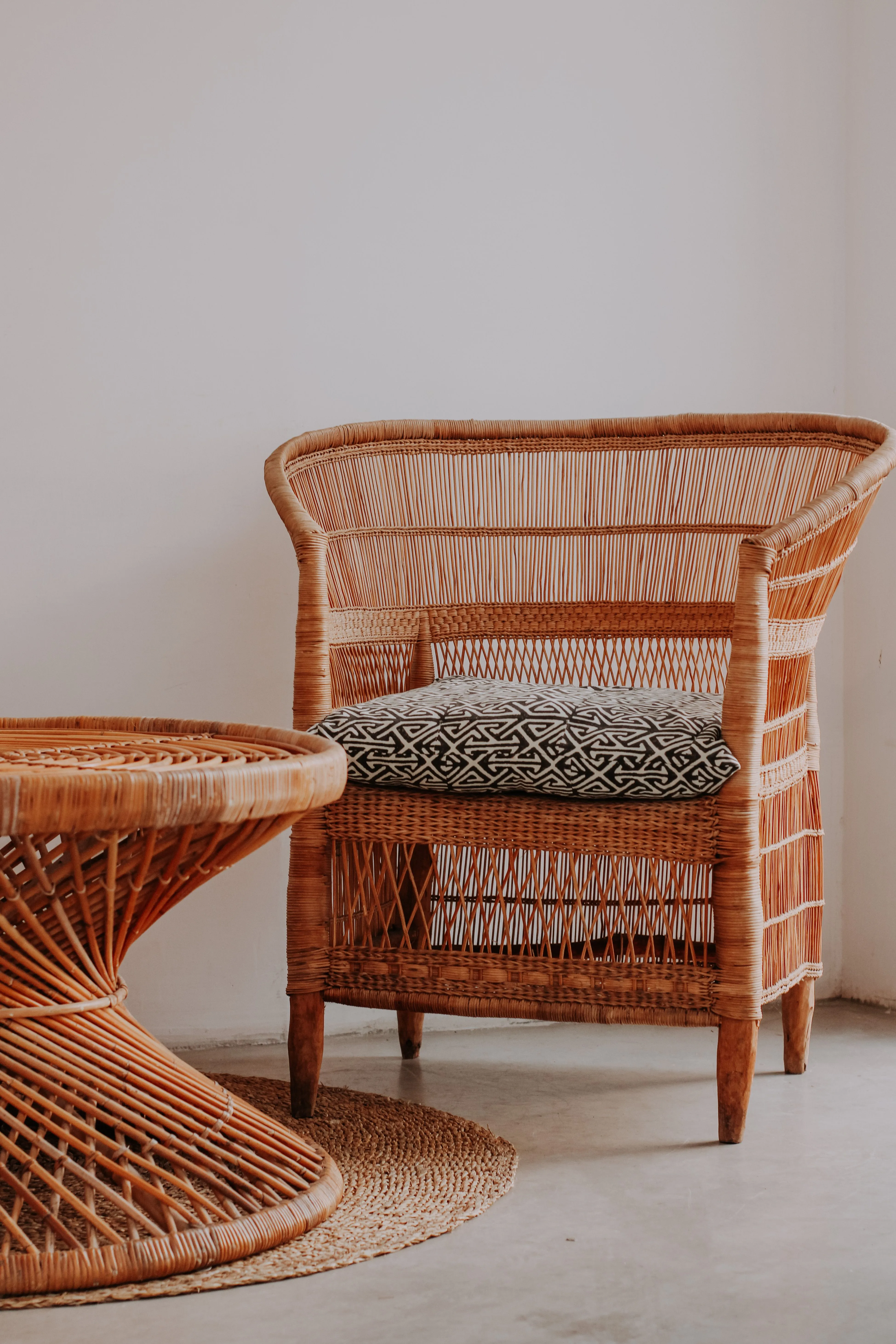
Rattan Guide | November 20, 2026
Gebogene Rattan-Möbelrahmen werden hergestellt, indem geeignete Rattanstangen ausgewählt, mit Hitze oder Dampf erweicht und um Formen oder Vorrichtungen gebogen werden, um die gewünschte Form zu erreichen.
See Details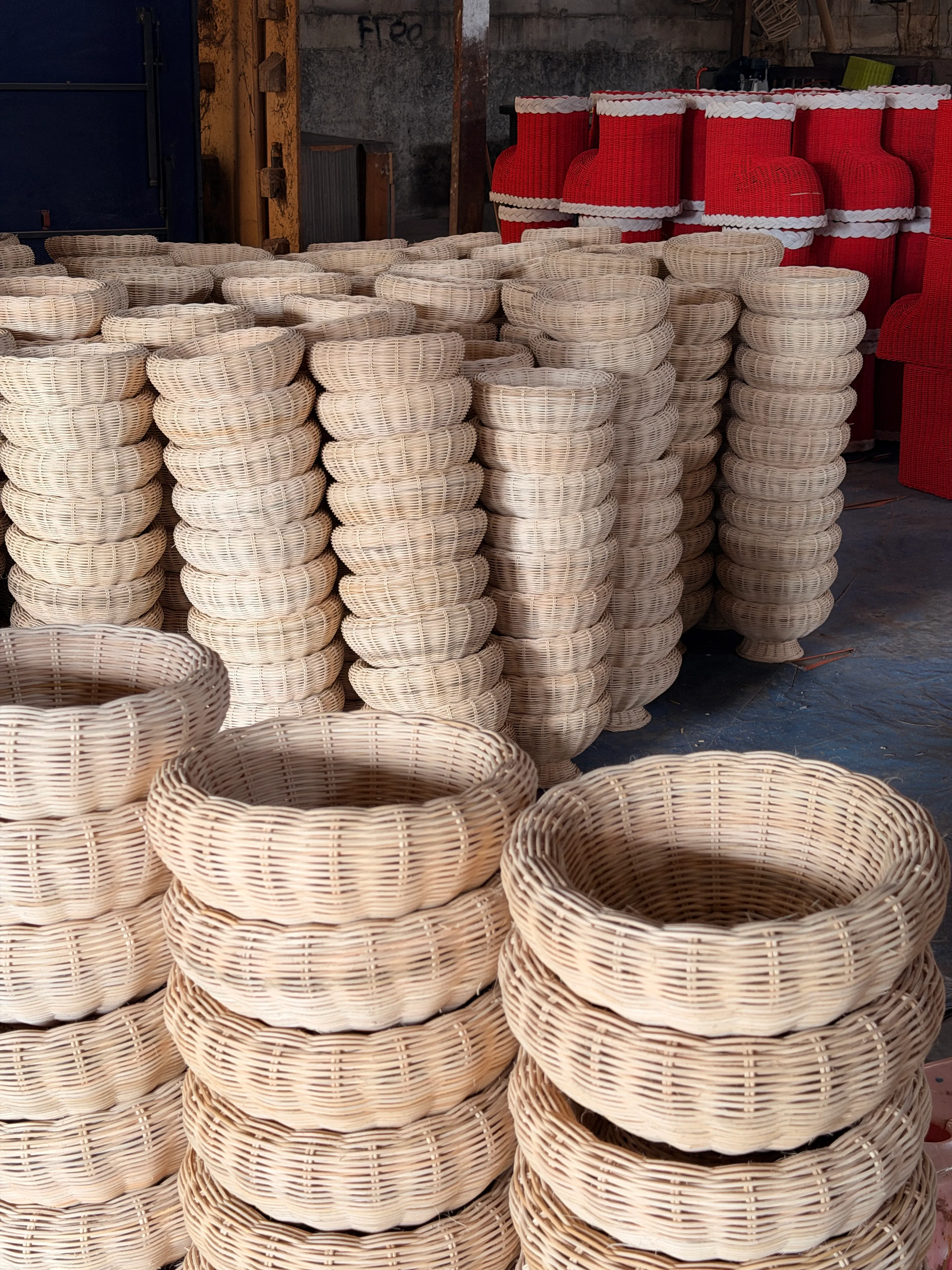
Rattan Guide | November 18, 2026
Not all rattan furniture is made entirely from natural rattan. Some products use natural rattan poles and woven fibers, while others incorporate synthetic strands, timber, metal, or upholstery. The term rattan furniture can therefore describe different material combinations, even when the finished products have similar appearances.
See DetailsSubcribe to our insight newsletter and be the first to receive the latest article and news updates form Tradeasia