
Materials | October 30, 2026
Rattan Core vs Rattan Peel: What's the Difference?
The main difference between rattan core and peel lies in their position within the stem and the form in which they are processed.
See Details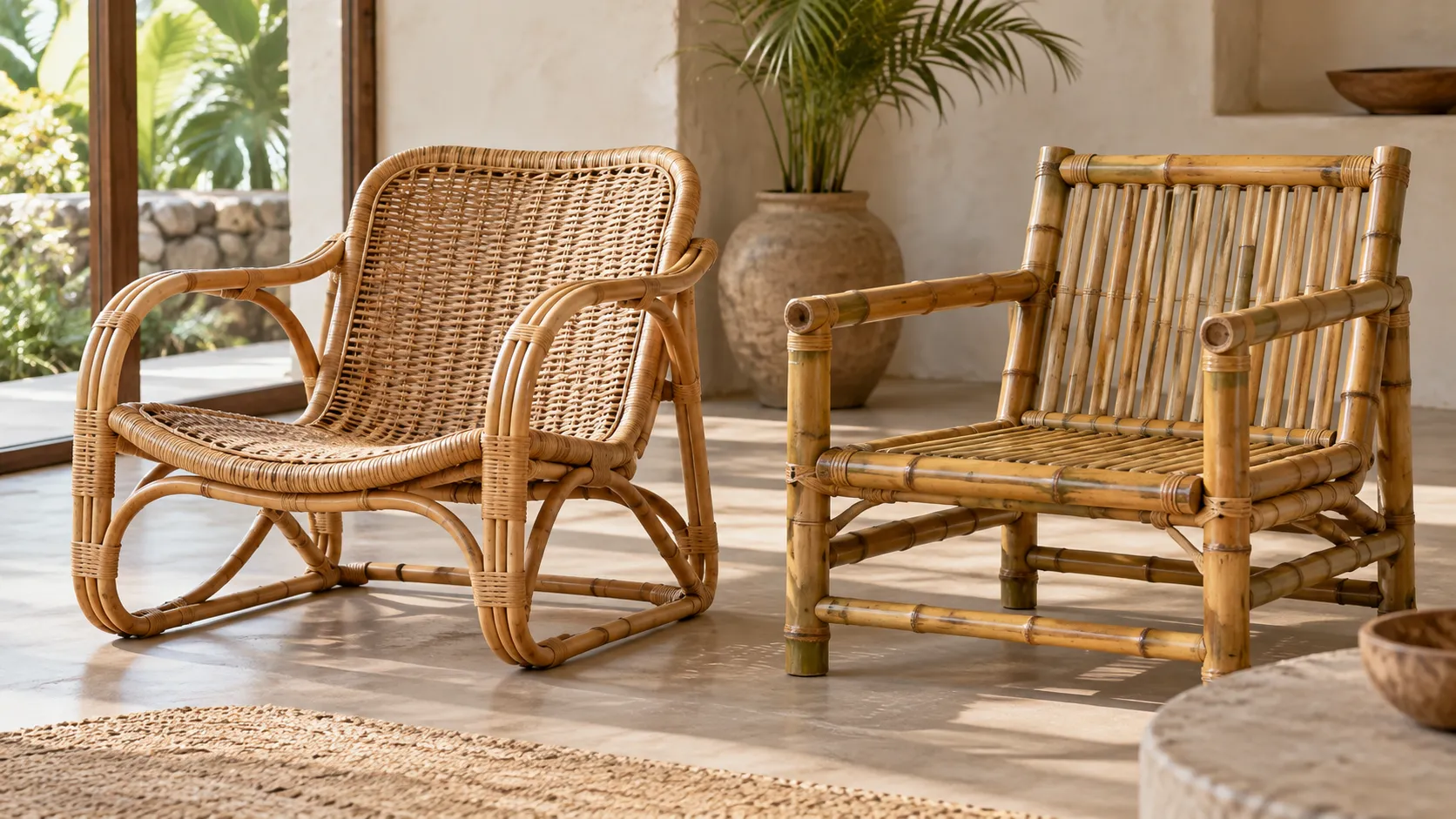
Rattan and bamboo furniture share a similar natural appearance, but their structures and applications differ. Rattan is a climbing palm with solid, flexible stems, while bamboo is a grass with typically hollow, segmented stems. Rattan is commonly used for curved furniture frames and woven details, whereas bamboo is often used for straight structures and engineered panels. Understanding these differences helps buyers select furniture based on design, durability, and intended use.
Rattan grows as a climbing palm in tropical forests. Its solid stems can be bent into furniture frames or processed into thinner strips for weaving and binding. This versatility makes it suitable for chairs, headboards, decorative panels, and furniture featuring curved silhouettes.
Bamboo grows as upright, segmented culms with hollow sections separated by solid nodes. It is commonly used for furniture frames, tables, shelving, and panels. Manufacturers can also process bamboo into laminated boards for more complex furniture designs.
The fundamental difference lies in their structure. Rattan's flexibility supports curved and woven designs, while bamboo's natural form is particularly useful for straight components and engineered furniture.
Rattan poles can be heated or steamed and bent into rounded frames for chair backs, armrests, and decorative structures. Manufacturers also use rattan core and peel for weaving and bindings, allowing different parts of the material to serve specific purposes within one furniture design.
Bamboo furniture typically uses straight culms connected through joints designed around its hollow structure and nodes. Although bamboo can be shaped into curves through lamination and other processing methods, this requires a different manufacturing approach from bending natural rattan poles.
These construction differences influence product design, assembly, and repair. Buyers should examine frame materials, joint methods, and supporting components rather than relying solely on the furniture's appearance.
Neither material is universally stronger. Bamboo provides useful structural properties, while rattan offers flexibility for curved furniture construction. However, the strength of a finished chair depends on its frame design, joints, supporting components, and manufacturing quality.
For example, a properly constructed rattan lounge chair may be suitable for regular indoor use, while a bamboo chair with weak joints may develop instability. The opposite can also occur. Commercial buyers should therefore prioritize finished-product stability, intended load requirements, and relevant testing evidence rather than general material claims.
Both rattan and bamboo furniture can remain functional for years when properly manufactured, maintained, and used in suitable environments. Neither has a fixed lifespan, as durability depends on material treatment, construction, finishing, and frequency of use.
Natural rattan furniture may develop loose weaving or weakened bindings when subjected to unsuitable conditions or repeated stress. Bamboo furniture can experience splitting or joint deterioration if the material is improperly processed or assembled. Moisture exposure and inadequate maintenance can affect both.
For long-term use, buyers should consider the quality of joints, protective finishes, ease of cleaning, and availability of repairable components rather than assuming one material will always last longer.
Natural rattan and bamboo are generally better suited to protected environments unless the specific products have been designed and treated for outdoor conditions. Prolonged exposure to rain, humidity, and sunlight can affect natural materials, finishes, and structural connections.
Rattan furniture may be appropriate for sheltered terraces where moisture exposure is limited, while bamboo furniture requires suitable preservation and finishing to withstand more demanding conditions. However, a roof alone does not guarantee protection from wind-driven rain or persistent humidity.
For fully exposed outdoor spaces, purpose-designed synthetic rattan furniture may be more appropriate. Buyers should verify that the frame, woven material, and hardware are suitable for the intended environment.
Rattan furniture is particularly suitable for hospitality interiors that emphasize curved shapes, woven textures, and natural materials. It is commonly considered for lounge chairs, bedroom seating, headboards, and decorative partitions. Bamboo offers alternatives for tables, shelving, cabinetry, and furniture incorporating straight components or laminated panels.
For hotels and restaurants, material selection should also reflect how frequently furniture is used. A decorative rattan chair in a guest room faces different demands from a dining chair used throughout the day. Frame stability, seating support, cleaning requirements, and maintenance should therefore influence the purchasing decision.
Both materials can also be combined within a furniture design. The important consideration is whether the completed product meets the project's functional and environmental requirements.
Furniture buyers should confirm the materials used in each component rather than relying on descriptions such as "natural rattan chair" or "bamboo furniture." Similar-looking products may contain different frames, woven surfaces, reinforcement, and finishing systems, which can affect quality and pricing.
For rattan furniture, buyers should review pole dimensions, weaving materials, frame joints, and finishes. For bamboo furniture, specifications should identify whether the product uses whole culms, split bamboo, or laminated components. Both require appropriate treatment, stable construction, and finishing suited to the intended environment.
Before bulk production, reviewing a representative sample helps buyers verify dimensions, workmanship, stability, and finish consistency. These checks also make supplier quotations easier to compare and reduce the risk of receiving furniture that differs from the approved specification.
Rattan is well suited to curved frames and woven furniture, while bamboo offers options for straight structures and engineered panels. The better choice depends on construction quality, design requirements, and intended use. For hospitality and commercial projects, explore Rattan Tradeasia to discover suitable rattan furniture and discuss your sourcing requirements.
Materials | October 30, 2026
The main difference between rattan core and peel lies in their position within the stem and the form in which they are processed.
See Details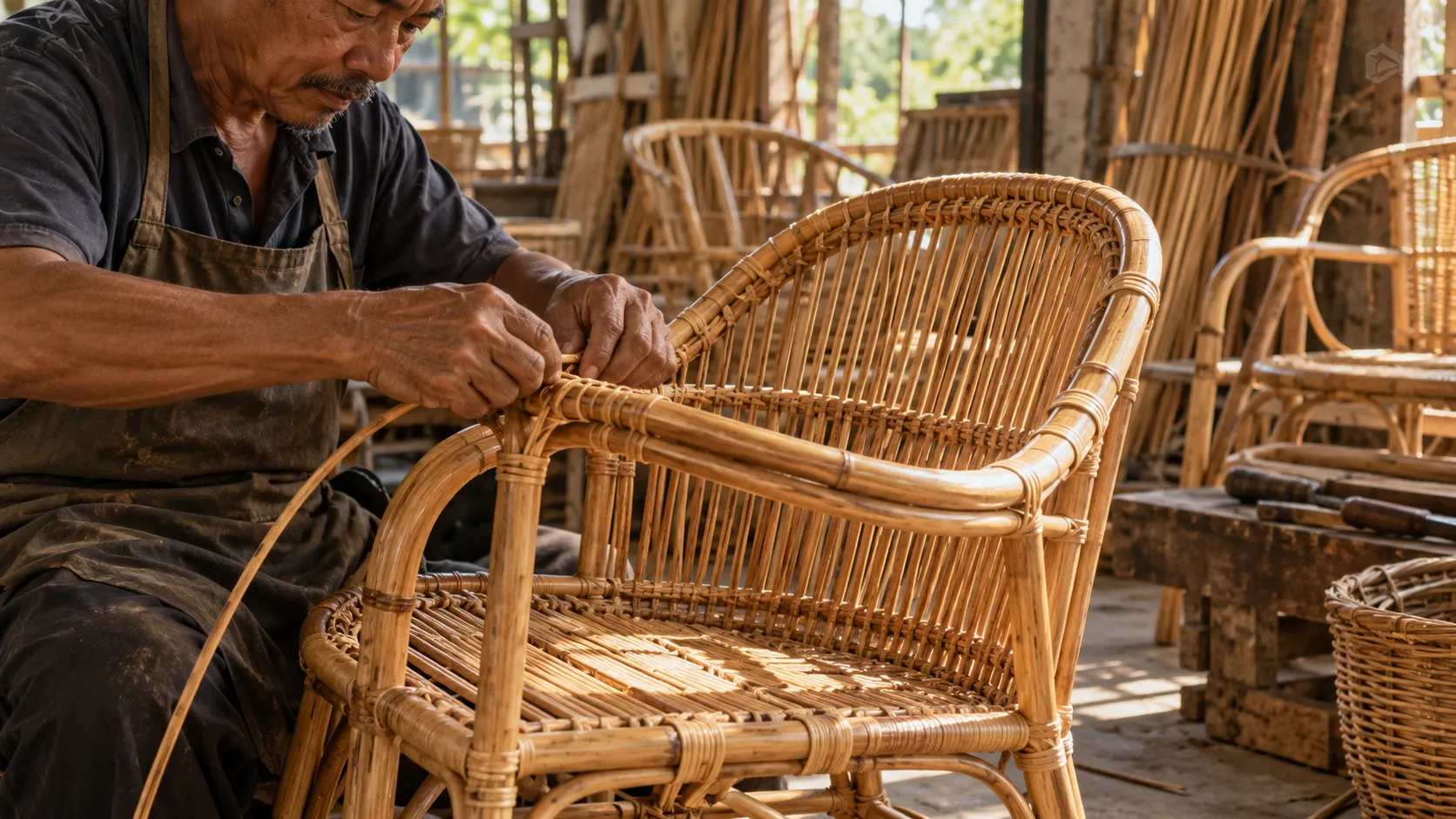
Rattan Guide | October 28, 2026
Although rattan furniture is often associated with handmade production, craftsmanship involves more than decorative weaving.
See Details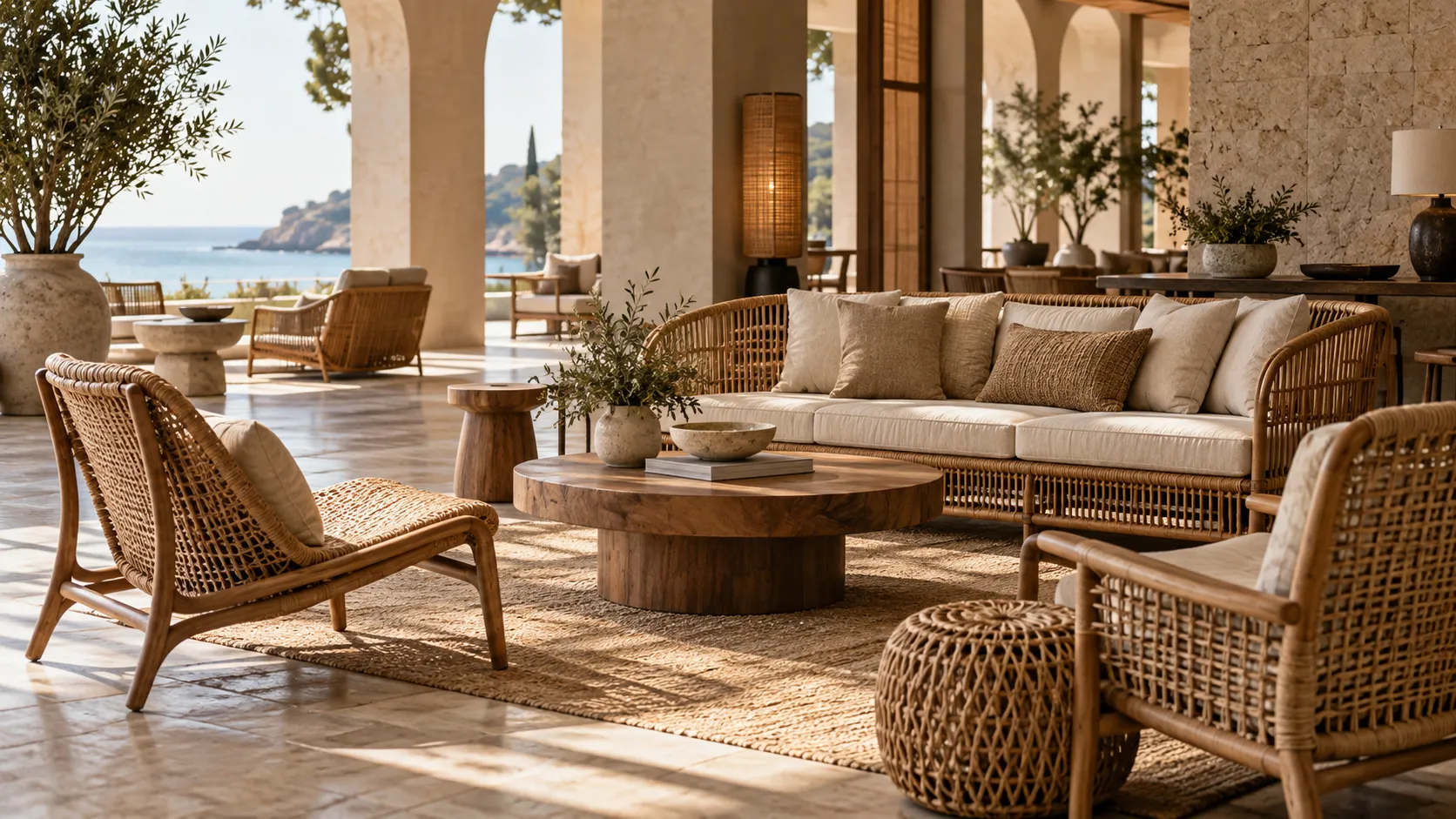
Buyer Guide | October 26, 2026
Factory-direct sourcing and trading companies offer different approaches to hotel furniture procurement, but neither automatically guarantees better quality or lower costs. The appropriate choice depends on the project's furniture requirements
See DetailsSubcribe to our insight newsletter and be the first to receive the latest article and news updates form Tradeasia