
Download Center||
Buyer Guide

Is Rattan Furniture Suitable for Coastal and Beachfront Areas?

October 5, 20265 Minutes
Is Rattan Furniture Suitable for Coastal and Beachfront Areas?
Which Rattan Works Near the Beach?

“Rattan furniture” can describe products with different materials and weather limitations. Before choosing a piece, establish whether its frame and woven surface are natural rattan, synthetic material, or a combination.

Natural Rattan

Natural rattan can be used near the ocean when it stays dry and protected. Guest rooms, enclosed lounges, and indoor dining spaces allow properties to use its texture without exposing it directly to rain or sea spray.

Its limitations become more significant outdoors. Natural rattan is a plant material, and prolonged moisture exposure can encourage mold and deterioration. Direct sunlight can also affect its appearance. A decorative finish does not automatically make indoor rattan suitable for permanent outdoor use.

A covered veranda may be suitable in some climates, but a roof alone is insufficient evidence. Wind-driven rain, damp floors, and humid conditions can still expose the furniture to moisture. Follow the product’s stated placement restrictions rather than assuming all sheltered areas are safe.

Synthetic Rattan

For exposed outdoor areas, purpose-built synthetic rattan is usually the more practical choice. Outdoor polyethylene weaving can provide a rattan-like appearance with better tolerance of wet conditions than natural fibers. UV stabilization is also relevant where furniture receives strong sunlight.

However, “synthetic rattan” is not a complete performance specification. The resin formulation, frame, fasteners, cushions, and construction all matter. Some furniture combines synthetic weaving with a natural rattan frame and still requires dry, sheltered placement.

Buyers should therefore confirm that the complete product is intended for the proposed outdoor setting. Weather-resistant weaving cannot compensate for a frame or cushion system unsuited to that exposure.


Where Can Rattan Be Used Along the Coast?

Assess placement by actual exposure rather than distance from the shoreline. Orientation, shelter, ventilation, and local weather can create different conditions across a single property.

Enclosed guest rooms and lounges: Natural rattan can be appropriate where furniture stays dry and receives routine care. Avoid placing it where open windows regularly admit rain or spray.

Covered balconies and verandas: Treat these as partially exposed spaces. If wind carries moisture onto the furniture, or surfaces remain damp, outdoor synthetic rattan is generally the more suitable starting point.

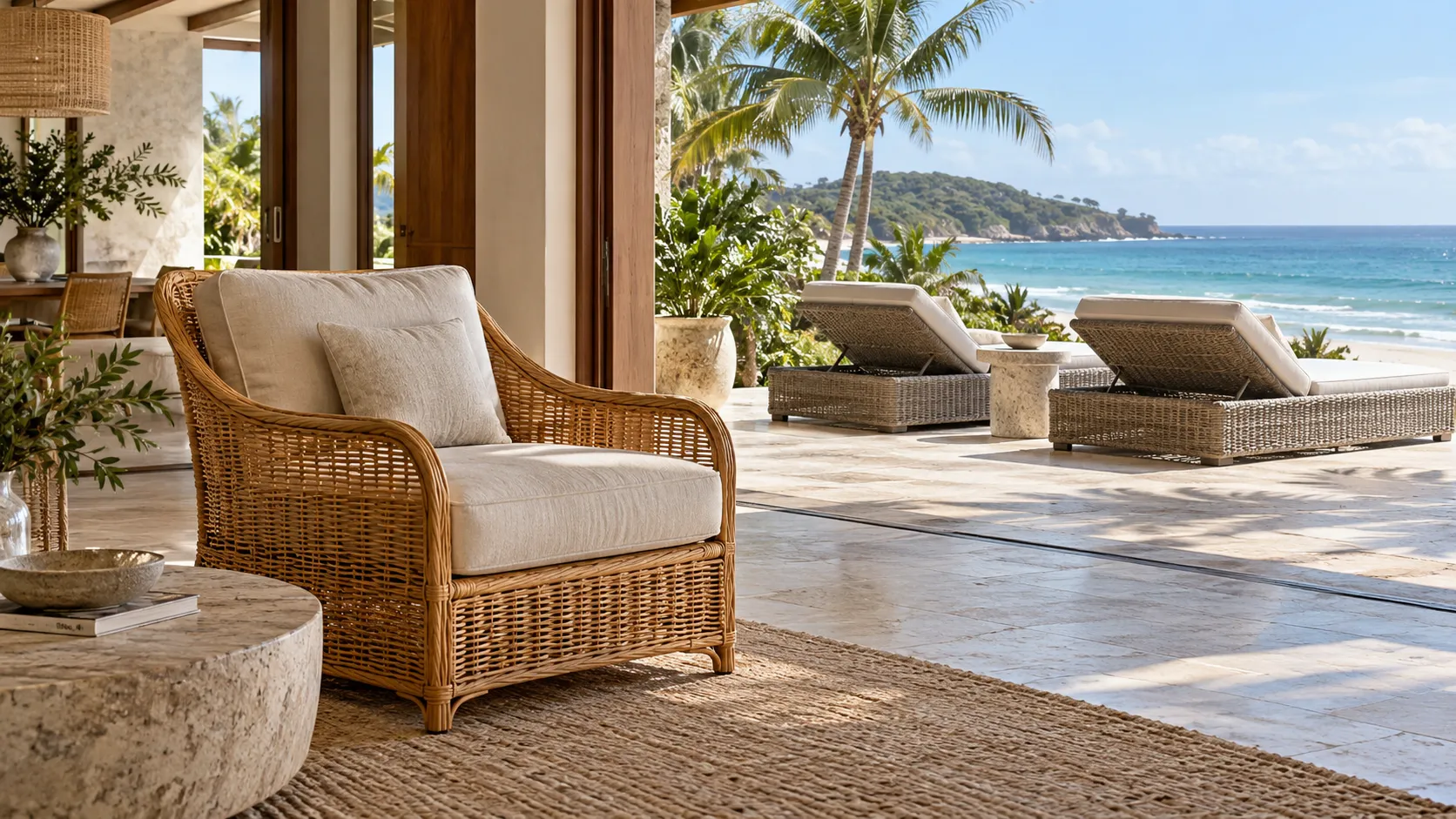
Open terraces and beachfront seating: Choose furniture explicitly intended for outdoor use, with suitable frames, fittings, and upholstery. Plan for cleaning and storage as part of the purchase.

This approach allows a resort to use natural rattan indoors and outdoor synthetic weaving elsewhere while maintaining a consistent visual style. There is no need to select one material for every area.

What Care Does Coastal Rattan Need?

Care should match the material and the whole product. For natural rattan, remove dust with a soft brush or vacuum attachment and follow the manufacturer’s guidance for wiping. Avoid soaking or hosing it down, and address spills promptly.

For outdoor synthetic rattan, remove sand and salt deposits using the approved cleaning method. Freshwater rinsing may be appropriate, but first confirm that the frame, fittings, and upholstery permit it. Allow furniture to dry before covering or storing it.

Hospitality teams should check joints, coatings, weave damage, and cushions during routine maintenance. Cleaning frequency should reflect actual salt and dirt accumulation. Before ordering, ask about placement limits, care requirements, replacement components, and warranty exclusions relevant to coastal use.

Conclusion

Rattan furniture can work well in coastal and beachfront properties when its placement matches its construction. Natural rattan is best reserved for dry, protected spaces, while outdoor synthetic rattan is generally more suitable where rain, spray, and sunlight reach the furniture. Evaluate the complete piece, including its frame and fittings, before deciding.

For your next coastal furnishing project, contact Rattan Tradeasia to discuss rattan options for your intended setting. Share whether the furniture will be used indoors, under cover, or in an exposed beachfront area so the discussion can focus on appropriate materials and care requirements.

Stay Inspired

Subcribe to our insight newsletter and be the first to receive the latest article and news updates form Tradeasia

Need help or product quote?👋 Chat with Assistant!