Download Center||
sourcing-export

The Rattan Export Process: From Forest Harvest to Your Warehouse

August 11, 20264 Minutes
The Rattan Export Process: From Forest Harvest to Your Warehouse
Treatment and Quality Control

Before rattan is ready for export, it undergoes a series of treatments to enhance durability and protect against pests. The most common method is fumigation, where the canes are placed in airtight chambers and exposed to chemicals like methyl bromide (now increasingly replaced by safer alternatives) or sulfuryl fluoride. This kills insects and larvae that might be present. Some suppliers apply borax solutions to increase resistance to fungi and termites.

Quality control is an integral part of the rattan export process. Experienced inspectors examine each batch for defects such as cracks, discoloration, or abnormal bending. They also test flexibility and strength by applying pressure to sampled canes. Strict adherence to quality standards ensures that importers receive consistent material, reducing the risk of claim disputes. Many factories also implement traceability systems, allowing buyers to verify the origin and treatment history of their rattan.

Legal Compliance and Export Documentation

Exporting rattan is heavily regulated to prevent illegal logging and promote sustainable trade. The Indonesian government, for example, requires exporters to obtain a V-Legal document, which certifies that the rattan was sourced legally and in compliance with environmental laws. This document is part of the Timber Legality Assurance System (TLAS). Without it, customs will not release the cargo, and the shipment may be seized.

Other essential documents include the Certificate of Origin, commercial invoice, packing list, and a Bill of Lading. Depending on the destination country, a Phytosanitary Certificate may also be required to prove that the rattan has been treated and is free from pests. Working with a customs broker or export agent who understands these requirements is vital, as errors can cause weeks of disruption. For example, if the HS code (HS 1401.20) is incorrectly declared, the shipment could face penalties or be rejected.

Packaging and Container Loading

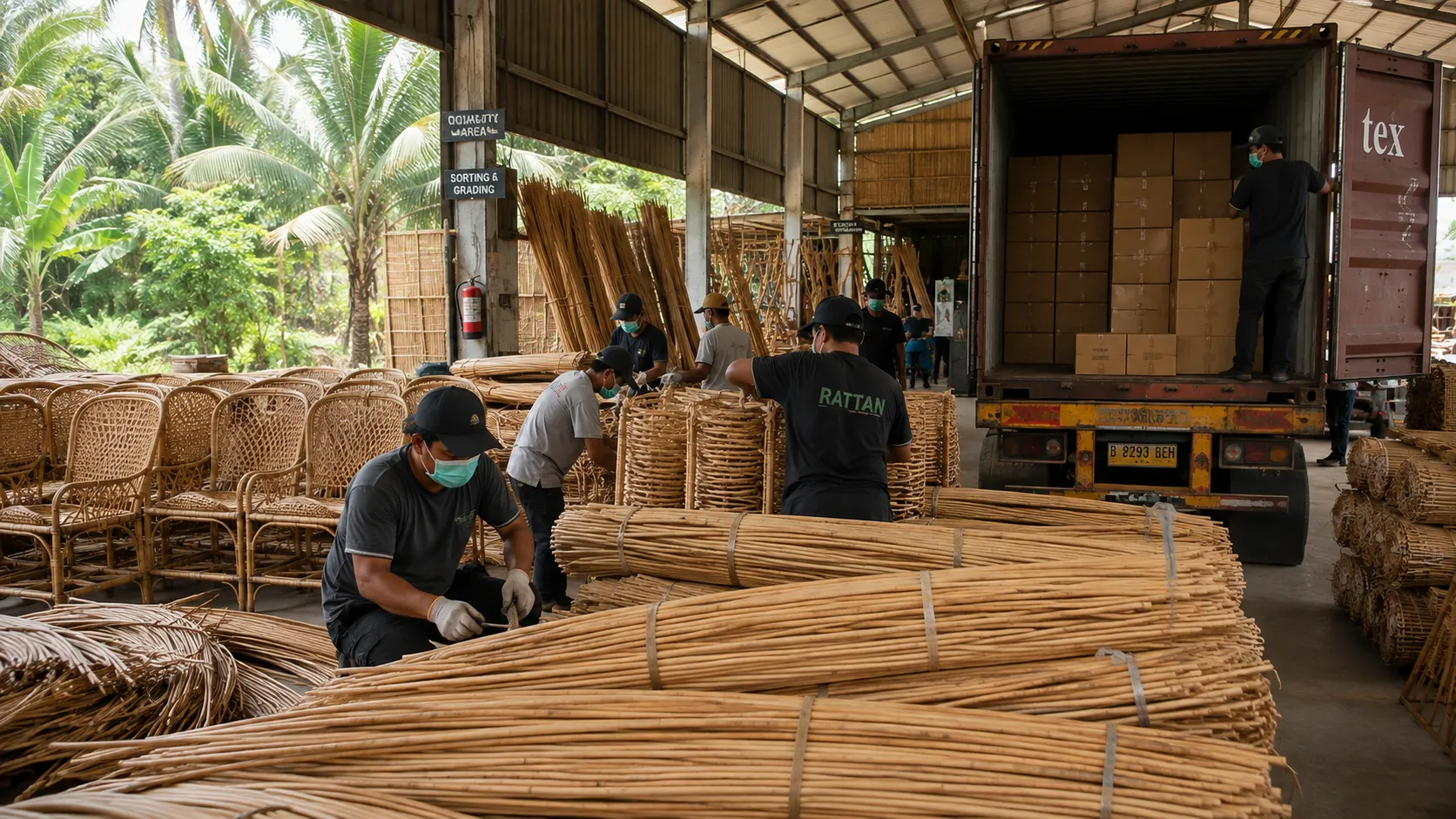
Proper packaging protects rattan during the long ocean voyage and simplifies handling at your warehouse. Typically, rattan canes are bundled into uniform groups and wrapped with polypropylene or jute bags. Each bundle is usually 1.5 to 2 meters long and weighs between 50 and 100 kilograms. These bundles are then loaded into 20-foot or 40-foot containers.

Loading requires strategic planning to maximize space and prevent damage. Experienced loaders use methods like “block stowage” to distribute weight evenly and avoid shifting during transit. It is also common to place desiccant bags inside the container to absorb moisture, which can cause black stains on the rattan. You should specify your loading preferences in the purchase contract to avoid disputes. For instance, you might require that all bundles be placed on pallets to allow forklift unloading.

Shipping and Logistics

The majority of rattan exports move by sea, with major departure ports including Jakarta, Surabaya, and Banjarmasin in Indonesia. Transit times to major markets like the United States or Europe typically range from 25 to 45 days, depending on the route. Importers must decide between FOB (Free on Board) and CIF (Cost, Insurance, and Freight) terms, which determine who is responsible for costs and risk.

Sea freight is the most common and economical method, but some importers use air freight for urgent orders. However, air freight is significantly more expensive and is only feasible for small quantities or high-value processed rattan. When selecting a shipping partner, consider their experience in handling agricultural products, as they will know how to manage humidity and ventilation. For example, some vessels have specialized holds with controlled airflow, which prevents condensation from damaging the goods.

Customs Clearance and Final Delivery

Once the ship arrives at your port, the rattan must clear customs in the destination country. This process involves submitting the required documents, paying duties, and undergoing inspections. In many countries, agricultural products are subject to additional checks for pests and diseases. To speed up clearance, you can pre-file your documentation electronically and work with a licensed customs broker.

After clearance, the rattan is transported by truck or rail to your warehouse or factory. It is crucial to inspect the delivery immediately to ensure that the quantity and quality match the order. Check for any signs of water damage, which could have occurred during transit. Having a claims procedure in place can help you address any issues with the supplier or shipping line. In my experience, building a strong relationship with your forwarder can greatly reduce the risk of problems at this stage.

Benefit of Working with a Reliable Supplier

Choosing the right supplier can make or break your rattan import business. A reliable supplier not only provides high-quality raw material but also assists with documentation, packaging, and coordination. They should be transparent about their sourcing practices and willing to share certificates. Many established suppliers have been in the industry for decades and have deep roots in local communities, ensuring a stable supply even during peak seasons.

  • Consistency in quality and grading, reducing waste and rework.
  • Legal compliance, ensuring your shipments clear customs smoothly.
  • Ethical sourcing, which appeals to eco-conscious consumers and avoids regulatory penalties.
Common Challenges and How to Overcome Them

Choosing the right supplier can make or break your rattan import business. A good supplier should provide consistent quality, reliable supply, proper documentation, and clear information about where the rattan comes from. Experienced suppliers can also make the importing process easier by helping with packaging, certificates, and shipment coordination.

The right supplier can help you:

  • Maintain consistent quality and grading, reducing waste and rework.
  • Meet legal and import requirements more smoothly.
  • Source rattan responsibly and with greater transparency.

For buyers exploring different sourcing options, platforms like Rattan Tradeasia bring verified suppliers and distinctive rattan products together in one B2B marketplace. This makes it easier to compare what is available and find rattan products that match your project and sourcing requirements. Which you can contact us for details

Conclusion

In summary, the rattan export process is a complex but manageable journey from forest to warehouse. By understanding each stage as follows: harvesting, treatment, documentation, packaging, shipping, and customs, you can optimize your supply chain and reduce costs. The key to success lies in partnering with trustworthy suppliers, adhering to legal requirements, and implementing strong logistics practices. 
Stay Inspired

Subcribe to our insight newsletter and be the first to receive the latest article and news updates form Tradeasia

Need help or product quote?👋 Chat with Assistant!