Introduction
Lead time is one of the most important factors in handmade rattan furniture sourcing. For B2B buyers, importers, wholesalers, furniture retailers, hospitality procurement teams, interior project buyers, and sourcing managers, understanding lead time helps avoid late shipments, missed project deadlines, rushed production, and unexpected procurement costs.
Handmade rattan furniture requires more planning than mass-produced furniture because many steps depend on material preparation, skilled craftsmanship, weaving, finishing, drying, quality control, packaging, and export readiness. Natural rattan itself is a flexible plant-based material used in cane and cane product markets, and rattan furniture production often involves manual processing and craftsmanship.
This guide explains how handmade rattan furniture lead time works, what factors affect the order timeline, and what B2B buyers should ask before confirming a bulk rattan furniture order.
What Is Lead Time in Handmade Rattan Furniture Orders?
Lead time refers to the total time needed from order confirmation to product readiness or delivery, depending on how the supplier defines it. In B2B furniture sourcing, lead time may cover sampling, material preparation, production, finishing, quality inspection, packaging, and shipment preparation.
For handmade rattan furniture, lead time is not only about factory production. It also includes supplier communication, sample approval, material sourcing, custom design confirmation, and export packing. A buyer who only asks “How fast can you produce?” may miss important steps that affect the final delivery schedule.
B2B buyers should always clarify whether the supplier’s stated lead time means production lead time only, shipment-ready lead time, or full delivery timeline including freight.
Why Lead Time Matters for B2B Furniture Buyers
Lead time matters because furniture orders are often connected to fixed business schedules. Retailers need stock before seasonal campaigns. Wholesalers need inventory for distributor demand. Hotels, villas, restaurants, and interior projects need furniture before opening dates, renovations, or installation deadlines.
If lead time is underestimated, buyers may face delayed launches, incomplete project handovers, higher freight costs, or rushed quality checks. For handmade rattan furniture, rushing production can also create quality risks such as weak weaving, poor finishing, inconsistent color, or insufficient drying time.
A clear lead time plan helps buyers coordinate RFQ submission, sample approval, deposit payment, production monitoring, inspection, packaging, shipment booking, and final delivery.
Key Stages in the Rattan Furniture Order Timeline
The process starts with the RFQ. Buyers should submit clear product details, quantity, material preference, dimensions, finish, customization needs, destination, and required timeline.
A complete RFQ helps the rattan furniture supplier respond faster with accurate pricing, MOQ, and lead time.
Sample development is needed when the buyer requests a new design, custom size, special finish, or first-time supplier order. This stage allows the buyer to check material, structure, comfort, weaving, finish, and packaging before bulk production.
Sample approval is a critical step. Production should not start until the buyer confirms the sample, specifications, color, dimensions, and expected quality standard.
Delays in sample feedback can delay the entire order timeline.
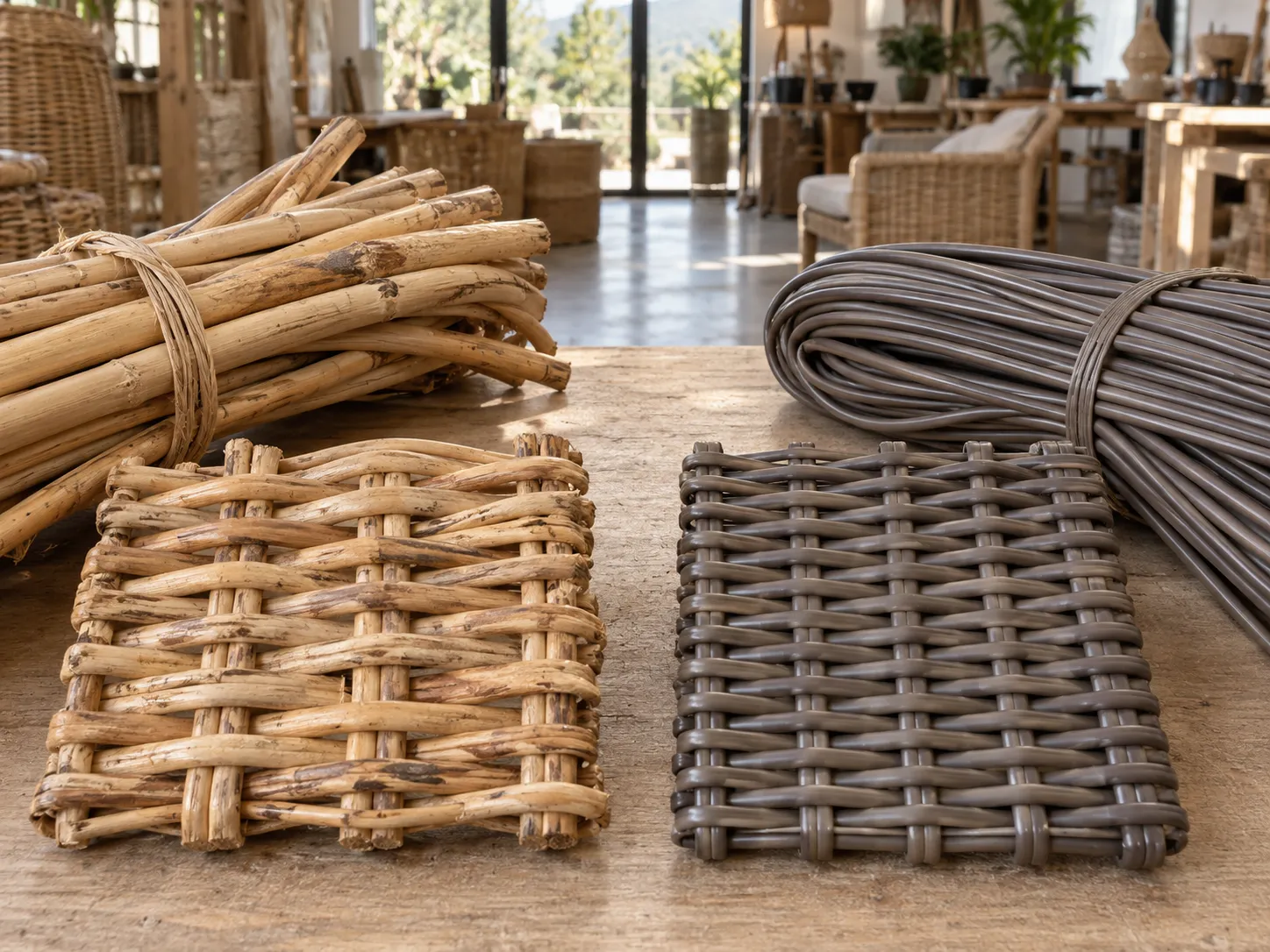
Material preparation may include selecting natural rattan, cane webbing, frames, cushion fabric, synthetic rattan, hardware, cartons, and finishing materials.
For natural rattan products, material consistency matters because color, diameter, flexibility, and surface condition can affect final product quality.
Handmade Weaving and Frame Production
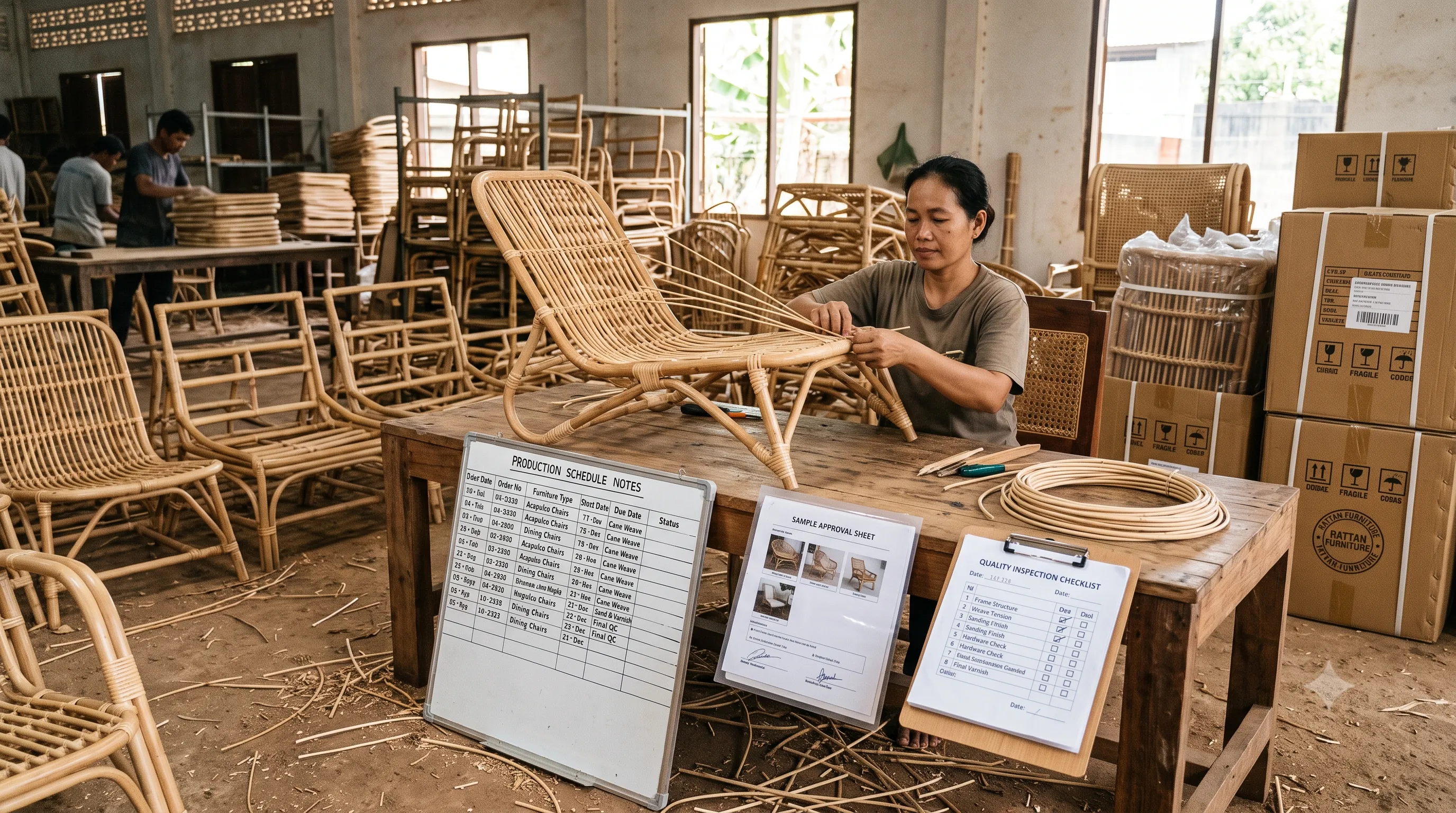
This is the core production stage. Skilled workers shape frames, assemble structures, and weave rattan components by hand.
The more complex the design, the longer this stage may take. Chairs, sofas, cabinets, lampshades, and room dividers all require different production methods.
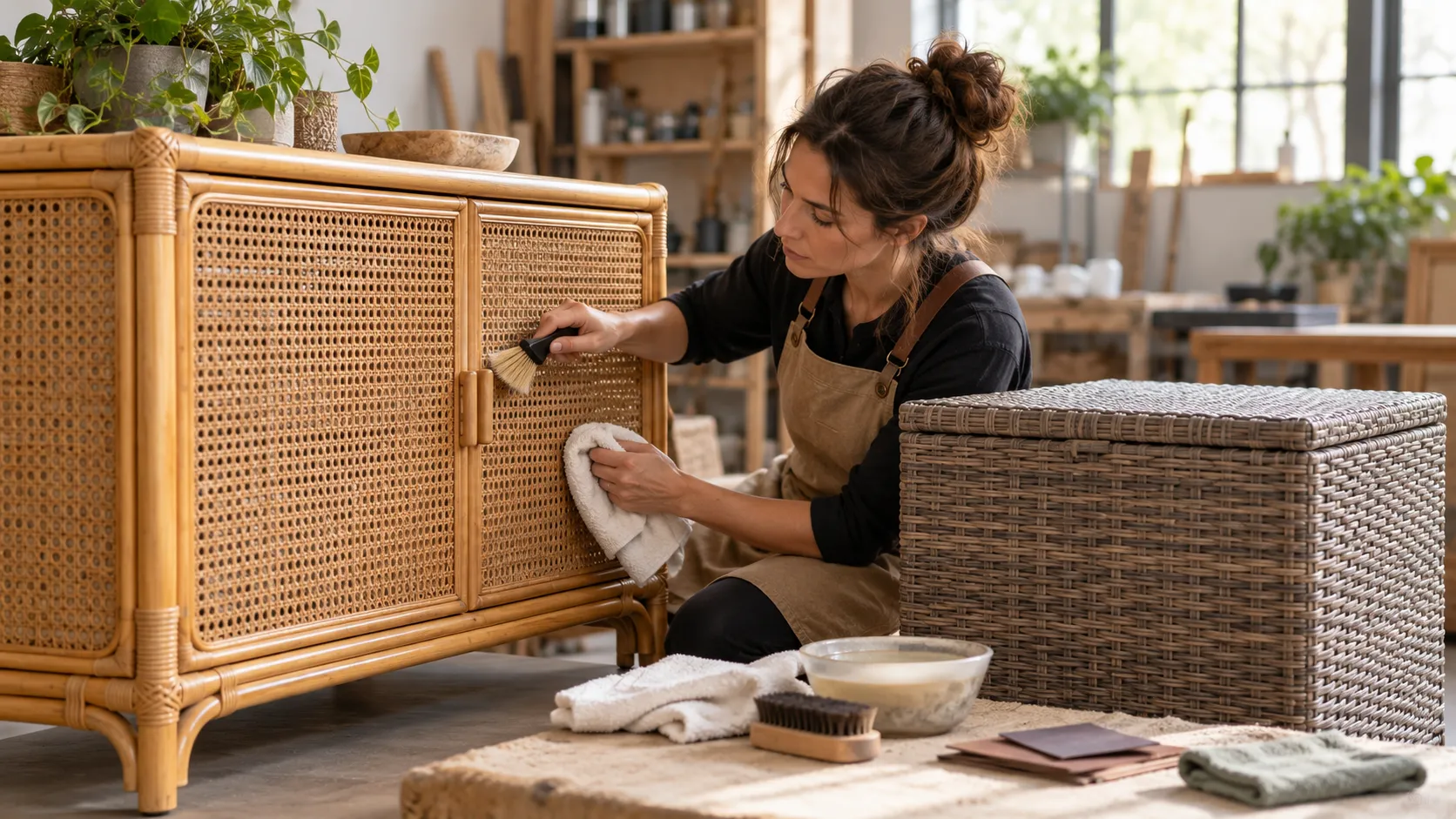
Finishing may include sanding, staining, painting, coating, polishing, or sealing. Drying time is important because rushed finishing can affect appearance, smell, durability, or surface quality.
For hospitality and export buyers, finishing consistency is especially important across bulk orders.
Quality Control Inspection
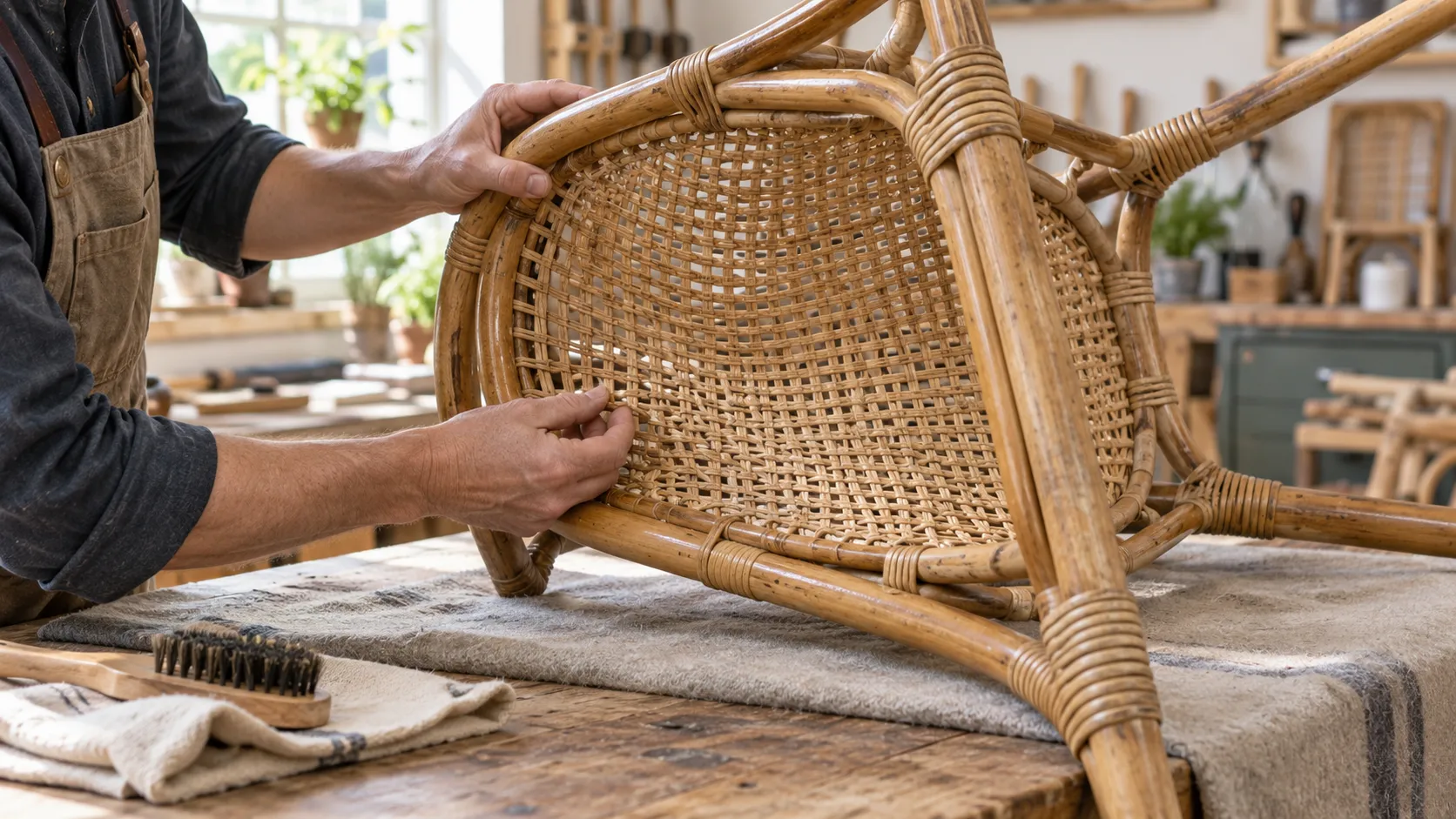
Quality control should check material, dimensions, frame stability, weaving quality, color, finish, packaging, and quantity. For chairs and tables, stability and structural strength should be reviewed carefully.
Packaging and Export Preparation
Packaging includes carton preparation, wrapping, corner protection, labeling, packing lists, and container loading planning. Rattan furniture is often bulky and can be damaged if packaging is weak.
Shipping time depends on destination, trade terms, freight method, port schedule, customs process, and logistics coordination. Buyers should separate production lead time from shipping transit time when planning delivery.
Factors That Affect Handmade Rattan Furniture Lead Time
Different products require different production timelines. Rattan chairs, tables, cabinets, lampshades, baskets, and cane webbing products do not have the same complexity.
Large furniture pieces usually require more time for frame production, weaving, finishing, and packaging.
A bulk rattan furniture order usually takes longer than a small order because the supplier needs more materials, labor, inspection time, and packaging preparation.
However, higher volume can sometimes improve production efficiency if the design is standardized.
Customization often increases lead time. Custom size, custom color, private label packaging, cushion fabric, weaving pattern, or new frame design may require sample development and extra approval.
Lead time may increase if natural rattan, cane webbing, fabric, frames, hardware, or packaging materials are not ready in stock.
Buyers should ask whether the material is available before confirming the timeline.
Simple weaving patterns are usually faster to produce. Complex patterns, decorative curves, tight weaving, and handmade detailing require more skilled labor and more time.
Natural finish, stained finish, painted finish, weather-resistant coating, or custom color matching can affect production time. Drying and curing should not be rushed.
Supplier Production Capacity
A supplier with strong capacity may handle larger orders faster, but only if labor, materials, and production space are available.
Buyers should ask whether the supplier has other active orders that may affect production scheduling.
Seasonality and Peak Order Periods
Peak buying seasons, holiday periods, high export demand, and material supply pressure can affect production lead time. Buyers should plan earlier when sourcing for seasonal retail or hospitality opening schedules.
Lead Time for Standard vs Custom Rattan Furniture
Standard rattan furniture usually has a shorter lead time because the supplier already has existing patterns, frames, production methods, and material planning. These products are better for buyers who need faster sourcing or market testing.
Custom rattan furniture usually takes longer because it may require design review, sample development, material testing, new frame construction, finish approval, and special packaging.
For B2B buyers, standard products are usually better for trial orders, while custom products are better for brand differentiation, hospitality projects, private label collections, and interior design specifications.
Lead Time for Common Rattan Product Categories
Rattan chairs may require frame preparation, weaving, finishing, cushion fitting, and stability checks. Dining chairs and lounge chairs should be checked for comfort, frame strength, and consistent dimensions.
Rattan tables may involve rattan frames, glass tops, wooden tops, or mixed materials. Lead time depends on tabletop material, frame complexity, and packaging method.
Rattan lampshades may be faster than large furniture items, but custom size, shape, weave, and lighting hardware can increase lead time.
Rattan Baskets and Storage
Baskets and storage products often depend on weaving complexity, size consistency, and volume. Bulk orders may require strong packaging to prevent deformation.
Rattan Cabinets and Panels
Cabinets and panels may take longer because they involve frames, cane webbing, doors, drawers, finishing, and dimensional accuracy.
Cane webbing lead time depends on pattern, roll width, order volume, material availability, and whether buyers need rolls or pre-cut panels.
Final Tips Before Confirming a Handmade Rattan Furniture Order
Before confirming an order, buyers should make sure the lead time is written clearly in the quotation or purchase agreement. The timeline should include sample development, sample approval, production, finishing, quality inspection, packaging, and shipment preparation.
Buyers should also confirm what happens if the sample needs revision. A revision may improve final quality, but it may also extend the schedule.
For large hospitality, retail, or wholesale orders, buyers should request regular production updates. Photos, videos, production milestones, and inspection reports can help buyers monitor progress and reduce uncertainty.
Conclusion
Handmade rattan furniture lead time depends on product type, quantity, customization, material availability, weaving complexity, finishing, supplier capacity, quality control, packaging, and shipping preparation. Because rattan furniture often involves natural materials and manual craftsmanship, buyers need a realistic timeline rather than a rushed schedule.
For B2B buyers, the best approach is to submit a clear RFQ, confirm specifications early, approve samples quickly, ask detailed lead time questions, and build buffer time into the sourcing plan. By understanding the full rattan furniture order timeline, buyers can reduce delays, improve supplier communication, protect project deadlines, and source better handmade rattan furniture for retail, wholesale, hospitality, and interior project needs.
Planning a handmade rattan furniture order for wholesale, retail, hospitality, or interior projects? Submit your RFQ today and connect with rattantradeasia who can support your product specifications, sample requirements, lead time planning, bulk order needs, and export sourcing process.