Download Center||
Rattan Guide

How to Choose a Rattan Furniture Supplier

July 14, 20265 Minutes
How to Choose a Rattan Furniture Supplier
Introduction

Choosing the right rattan furniture supplier starts with evaluating more than price and product photos. B2B buyers should compare material quality, craftsmanship, production capacity, export experience, customization options, quality control, packaging, MOQ, payment terms, and communication before placing an order. The right supplier should be able to meet your product specifications, maintain consistent quality, deliver on schedule, and support reliable long-term sourcing.


Understand Your Rattan Furniture Sourcing Needs

Before evaluating suppliers, buyers should define their sourcing requirements clearly. This includes product type, target market, material preference, order quantity, budget range, delivery timeline, packaging needs, and customization expectations.

For example, a furniture retailer sourcing natural rattan dining chairs may have different requirements from a hotel buyer sourcing custom lounge chairs for a resort project. A wholesaler may prioritize container volume and repeatable designs, while an interior designer may prioritize craftsmanship and customization.

Buyers should prepare a clear RFQ before contacting suppliers. A strong RFQ should include product category, dimensions, material preference, finish, quantity, target price if available, destination port, packaging expectations, and required delivery timeline.


Check the Supplier’s Product Range

A good rattan furniture supplier should have a clear and relevant product range. Buyers should review whether the supplier offers chairs, tables, sofas, cabinets, baskets, mirrors, lighting, décor items, or project-based furniture.

A broad product range can be useful for buyers who want to build a complete collection from one supplier. However, product range alone is not enough. Buyers should also check whether the supplier has real production experience in the specific product category they need.

For example, a supplier that is strong in rattan baskets may not automatically be strong in rattan lounge chairs. Furniture products require stronger frames, load stability, better finishing, and stricter packaging than smaller décor items.


Evaluate Material Quality and Craftsmanship

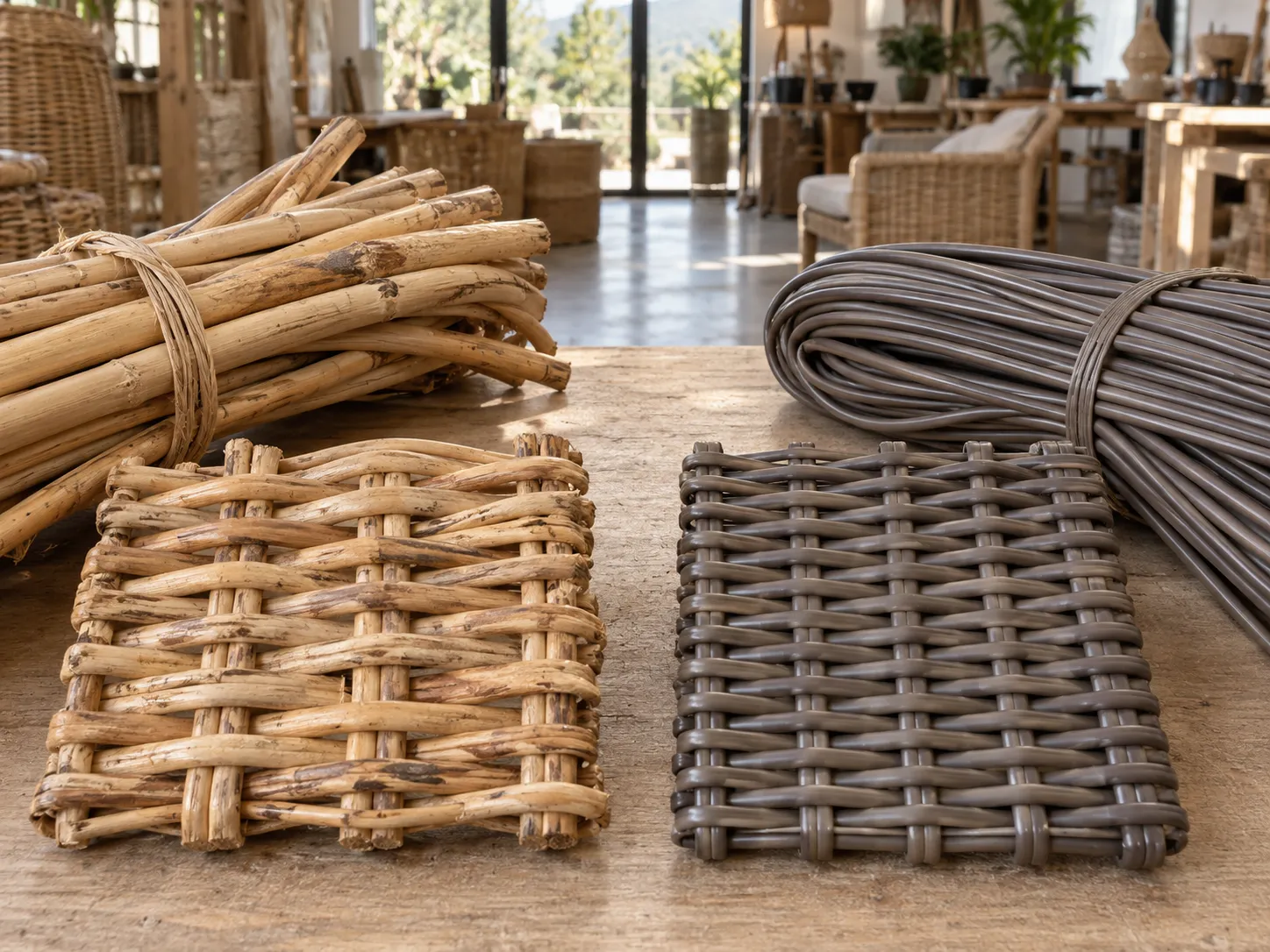
Material quality is one of the most important factors in rattan furniture sourcing. Buyers should confirm whether the product is made from natural rattan, synthetic rattan, cane, bamboo, seagrass, or mixed material. This prevents confusion during quotation and production.

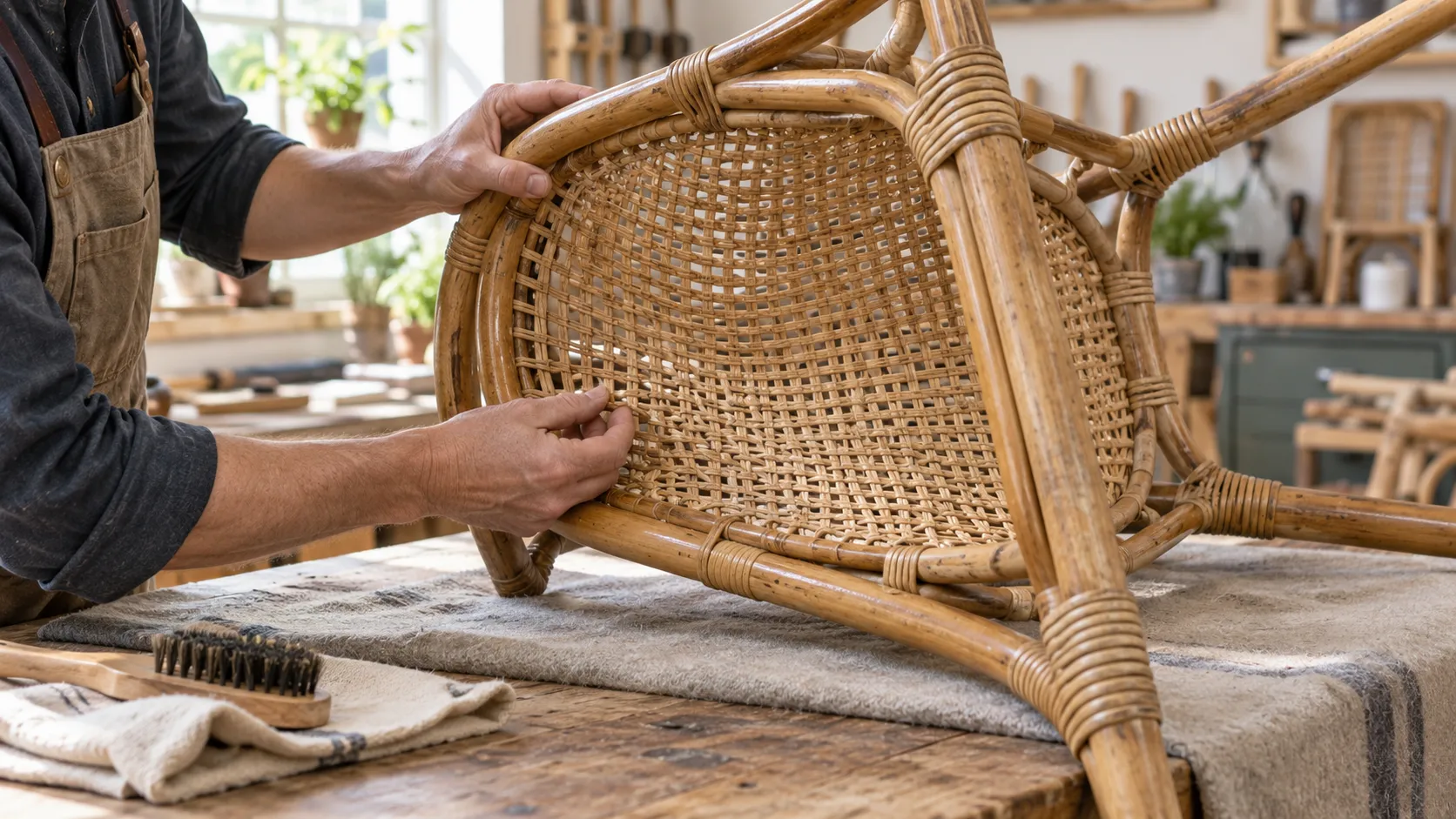
Good natural rattan furniture should show consistent material selection, smooth finishing, clean weaving, and strong construction. Natural variation is normal, but excessive color inconsistency, rough edges, loose weaving, or cracked material can indicate weak quality control.

Craftsmanship also matters. Buyers should check the tightness of the weave, joint finishing, frame stability, binding strength, and overall product balance. For chairs, sofas, stools, and tables, the product must not only look good but also perform well during repeated use.


Review Supplier Experience and Export Capability

B2B buyers should check whether the supplier has experience with export orders. Export sourcing is different from local selling because it involves packaging standards, container loading, documentation, lead time discipline, and international communication.

An experienced supplier should understand product specifications, commercial invoices, packing lists, shipment coordination, buyer inspections, and quality expectations. The supplier should also be able to explain previous export markets or buyer segments without overpromising.

Export capability is especially important for furniture buyers because rattan products can be bulky, fragile, or sensitive to handling. A supplier that understands export packaging and loading can help reduce product damage during long-distance shipment.


Check Production Capacity and Lead Time

Production capacity determines whether a supplier can handle the buyer’s order volume. Buyers should ask about monthly capacity, production schedule, number of workers or workshops, sample lead time, mass production lead time, and peak season limitations.

Lead time should be realistic. A supplier promising very fast delivery without explaining production capacity may create risk. For custom rattan furniture, buyers should allow time for sampling, approval, material preparation, weaving, finishing, drying, inspection, packaging, and shipment preparation.

For repeat buyers, production consistency is also important. The supplier should be able to reproduce the same design, dimensions, color, and finish across multiple orders.


Ask About Customization Options

Many B2B buyers need customization. This may include size adjustment, weaving pattern changes, finish color, cushion fabric, frame design, private label, packaging label, or project-specific specifications.

A capable rattan furniture supplier should be able to explain which customization options are possible and which limitations apply. Not every design can be changed easily, especially if it affects frame strength or production efficiency.

Buyers should request samples before confirming bulk customization. A sample helps validate material, design, comfort, finish, color, and packaging before mass production begins.


Verify Certifications, Legal Documents, and Business Credibility

Supplier credibility is important in global sourcing. Buyers should verify basic company information, business registration, factory or workshop details, export experience, and available documentation.

Depending on the buyer’s market and product requirements, relevant documents may include company profile, product specifications, material information, inspection reports, fumigation documents, sustainability-related information, or certification details.

Buyers should also be careful with suppliers that cannot provide basic business details or avoid answering documentation questions. Professional suppliers usually understand that B2B buyers need transparency before placing bulk orders.


Assess Quality Control Standards

Quality control should be discussed before production starts, not after problems appear. Buyers should ask how the supplier checks material, frame construction, weaving, finishing, dimensions, color, stability, and packaging.

A good supplier should have clear inspection steps. These may include raw material inspection, in-process checking, final product inspection, packaging inspection, and pre-shipment inspection.

Buyers should also agree on quality expectations in writing. This includes acceptable material variation, finish tolerance, size tolerance, packaging requirements, and defect handling procedures.


Review Packaging and Shipping Readiness

Packaging is a major factor in rattan furniture sourcing. Even well-made furniture can arrive damaged if packaging is weak. Buyers should ask for packaging photos, carton specifications, wrapping material, corner protection, stacking method, and container loading plan.

Rattan furniture may need special protection because woven parts can be scratched, bent, or broken during handling. For chairs, tables, cabinets, and large items, buyers should confirm whether products are packed assembled, semi-assembled, or knocked down.

Shipping readiness also includes labeling, packing list accuracy, carton marks, and loading efficiency. Poor loading can increase freight cost or product damage risk.


Compare Pricing, MOQ, and Payment Terms

Price comparison should be based on the same product specification. Buyers should avoid comparing quotations without confirming material, frame, dimensions, finish, cushion, packaging, and shipping terms.

MOQ is also important. Some suppliers may accept small trial orders, while others focus on container-based orders. Buyers should choose a supplier whose MOQ fits their business stage and purchasing plan.

Payment terms should be clear and professional. Buyers should confirm deposit percentage, balance payment timing, payment method, sample cost, mold or customization cost, and cancellation rules before confirming the order.


Evaluate Communication and RFQ Response Speed

Communication quality is a strong indicator of supplier reliability. A professional supplier should respond clearly, answer technical questions, provide complete quotations, and update buyers during sampling and production.

Slow or unclear communication can create sourcing risk. If the supplier cannot respond properly during the RFQ stage, the buyer may face bigger issues during production, inspection, or shipment.

Buyers should evaluate how the supplier handles questions about material, MOQ, lead time, packaging, customization, and quality control. Strong suppliers usually provide structured answers instead of vague promises.


Common Red Flags When Choosing a Rattan Supplier

B2B buyers should be careful when a supplier offers prices that are far below market level without explaining material or quality differences. Very low prices may indicate weaker material, thinner frames, poor finishing, or lower packaging standards.

Another red flag is unclear product information. If the supplier cannot confirm whether the product is made from natural rattan, synthetic rattan, bamboo, seagrass, or mixed material, buyers should not proceed too quickly.

Buyers should also be cautious if the supplier avoids sample requests, refuses documentation, gives unrealistic lead times, changes prices frequently, or does not provide packaging details. These signs may indicate operational weakness or poor sourcing reliability.


Conclusion

Choosing a rattan furniture supplier requires more than reviewing photos and comparing prices. B2B buyers should evaluate material quality, craftsmanship, supplier experience, production capacity, customization ability, documentation, quality control, packaging, pricing, MOQ, payment terms, and communication speed. A reliable supplier can help buyers reduce procurement risk, improve product consistency, protect delivery timelines, and build stronger furniture collections. The best supplier is not always the cheapest supplier. The best supplier is the one that can deliver the right balance of quality, reliability, price, service, and long-term sourcing support.

If you are exploring rattan furniture suppliers for your next collection or project, RattanTradeAsia can help you discover products and sourcing options from suppliers across the rattan furniture industry. Browse the marketplace to compare products, explore materials, and find options that match your requirements.


 

Stay Inspired

Subcribe to our insight newsletter and be the first to receive the latest article and news updates form Tradeasia

Need help or product quote?👋 Chat with Assistant!