Download Center||
sourcing-export

Export Packaging Guide for Rattan Furniture

July 24, 20265 Minutes
Export Packaging Guide for Rattan Furniture
Introduction

Export packaging for rattan furniture is one of the most important parts of B2B furniture sourcing. A well-made rattan chair, table, lampshade, basket, cabinet, or cane webbing panel can still arrive damaged if the packaging is weak, poorly designed, or unsuitable for long-distance shipping.

For B2B buyers, importers, wholesalers, furniture retailers, hospitality procurement teams, interior project buyers, and sourcing managers, packaging is not just a logistics detail. It affects product safety, damage claims, customer satisfaction, freight cost, warehouse handling, and final landed cost.

Rattan furniture often has woven surfaces, curved frames, natural material textures, and delicate decorative details. These characteristics make it visually attractive, but they also require proper protection during export shipping. This guide explains how buyers should evaluate rattan furniture packaging before confirming a bulk order.
 

Why Export Packaging Matters in Rattan Furniture Sourcing

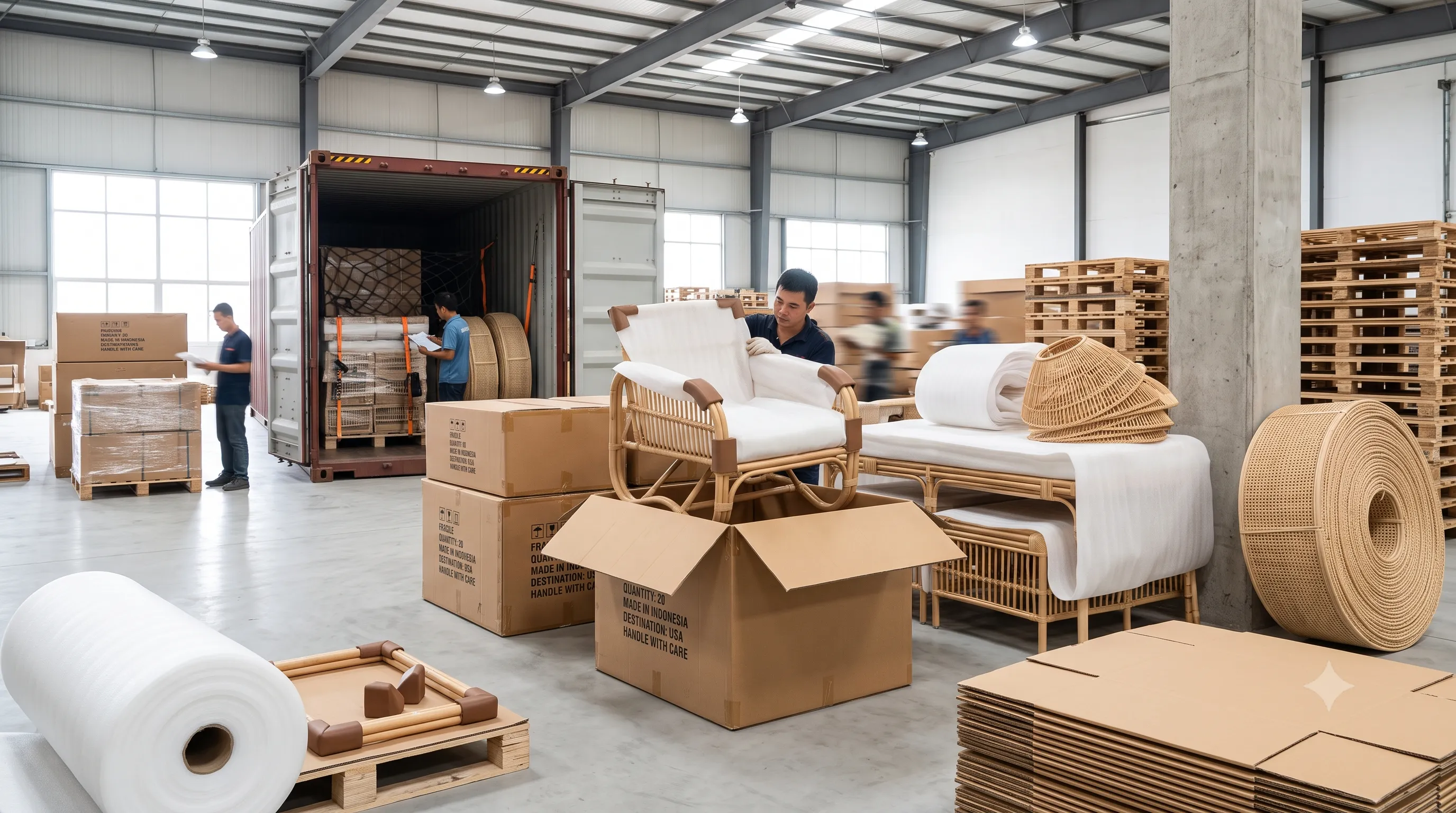
Export packaging matters because international furniture shipments pass through several handling stages. Products may move from workshop to warehouse, warehouse to truck, truck to port, port to container, container to destination port, and then to the buyer’s warehouse or project site.

During this process, rattan furniture can face vibration, stacking pressure, moisture, rough handling, carton compression, and container movement. Without proper packaging, woven parts may break, frames may bend, corners may scratch, and lampshades or baskets may lose shape.

For B2B buyers, damaged goods can create serious business problems. Retailers may lose sales, wholesalers may face customer complaints, and hospitality projects may face installation delays. Good packaging reduces these risks and supports a smoother sourcing process.


Common Packaging Risks for Rattan Furniture

Rattan furniture is vulnerable to several packaging risks. The first is surface damage. Natural rattan, woven cane, painted finishes, and stained surfaces can be scratched if products are not wrapped properly.

The second risk is deformation. Rattan lampshades, baskets, chairs, and woven panels may lose shape when compressed or stacked incorrectly. Large or lightweight items need internal support to maintain structure.

The third risk is moisture damage. Natural materials can be sensitive to high humidity, poor ventilation, or wet packaging conditions. If products are packed before they are fully dry, mold or odor may develop during transit.

The fourth risk is weak carton protection. If cartons are too thin or not suitable for export shipment, they may collapse during loading or handling. Fragile goods require suitable packaging materials and correct packing methods to reduce damage risk.


Key Export Packaging Materials for Rattan Products

Corrugated Cartons

Corrugated cartons are commonly used for rattan furniture and décor exports. Buyers should ask about carton thickness, flute type, carton strength, and whether the carton is suitable for export handling.

Large rattan chairs, tables, lampshades, and cabinets may need stronger cartons than small baskets or accessories. For bulky furniture, double-wall cartons are often more practical than basic cartons.

Bubble Wrap and Foam Protection

Bubble wrap and foam protection help protect surfaces, woven edges, and fragile parts. Each product should be wrapped carefully to prevent rubbing and scratches during transit.

DHL’s packing guidance recommends wrapping items individually and using dividers when multiple fragile items are shipped in one package. It also recommends keeping items away from external walls and corners of the box to reduce damage risk.

Corner Protectors

Corner protectors are useful for rattan tables, cabinets, panels, mirrors, and boxed furniture. Corners are often the first areas damaged during handling.

Buyers should confirm whether the supplier uses paper corner guards, foam corner protectors, plastic protectors, or custom protection depending on the product type.

Plastic Wrapping

Plastic wrapping can help protect against dust, light moisture exposure, and surface contact. However, it should be used carefully. If natural rattan products are wrapped too tightly before they are dry, moisture may become trapped inside.

For natural rattan furniture, buyers should ask suppliers how they manage moisture before wrapping.

Wooden Crates and Pallets

Wooden crates and pallets may be used for fragile, high-value, oversized, or project-based rattan furniture shipments. They can improve protection and handling stability.

However, wood packaging materials used in international trade may need to comply with ISPM 15. The International Plant Protection Convention explains that ISPM 15 provides a harmonized approach to address pest risks from wood packaging material in international movement and uses a recognized mark instead of requiring phytosanitary certificates for treated wood packaging.

Moisture Protection Materials

Moisture protection may include desiccants, moisture barrier bags, container desiccants, ventilation planning, and proper product drying before packing.

This is especially important for natural rattan, cane webbing, baskets, and furniture shipped through humid routes or stored for long periods.


Packaging Requirements by Product Type

Rattan Chairs

Rattan chairs need protection for the frame, legs, backrest, seat, and woven areas. Chairs may be packed individually, stacked with separators, or shipped in knock-down format depending on design.

Buyers should check whether chair legs are protected, whether woven backs are separated from pressure points, and whether the chair frame remains stable inside the carton.

Rattan Tables

Rattan tables require protection for tabletops, corners, legs, glass components, and woven surfaces. If the table includes glass, it should be packed separately with proper fragile protection.

For larger tables, knock-down packaging may reduce volume and freight cost, but buyers should confirm that assembly instructions and hardware are included.

Rattan Lampshades

Rattan lampshades are lightweight but easily deformed. They need internal support, shape protection, and careful stacking. Oversized lampshades may require custom cartons.

Buyers should confirm whether lampshades are nested. If nesting is used, each piece should be separated properly to prevent pressure marks and broken weaving.

Rattan Baskets and Storage

Rattan baskets can often be nested to save space, but nesting must be done carefully. Too much pressure can deform the shape or damage handles.

Buyers should check whether baskets have internal support, wrapping between units, and carton protection against compression.

Rattan Cabinets and Panels

Rattan cabinets and panels require strong corner protection, surface wrapping, and carton reinforcement. Cane webbing panels should be protected from bending, tearing, or uneven pressure.

For cabinets, buyers should ask whether doors, hinges, handles, and drawer parts are protected separately.

Cane Webbing Rolls and Panels

Cane webbing rolls should be packed to prevent crushing, moisture exposure, and deformation. Pre-cut panels need flat protection so they do not bend or crack.

Buyers should confirm roll width, roll length, panel size, carton size, and moisture protection method.


How to Protect Rattan Furniture During Export Shipping

Rattan furniture should be protected through a layered packaging approach. The first layer protects the product surface. The second layer protects impact-sensitive areas such as corners, legs, and woven edges. The third layer protects the product inside the carton. The final layer protects the carton during loading and stacking.

Buyers should ask suppliers for packaging photos before shipment. This helps verify whether the packaging matches the product value and shipping route.

For high-value or custom project orders, buyers may request packaging approval before mass production shipment.


Moisture, Humidity, and Mold Prevention

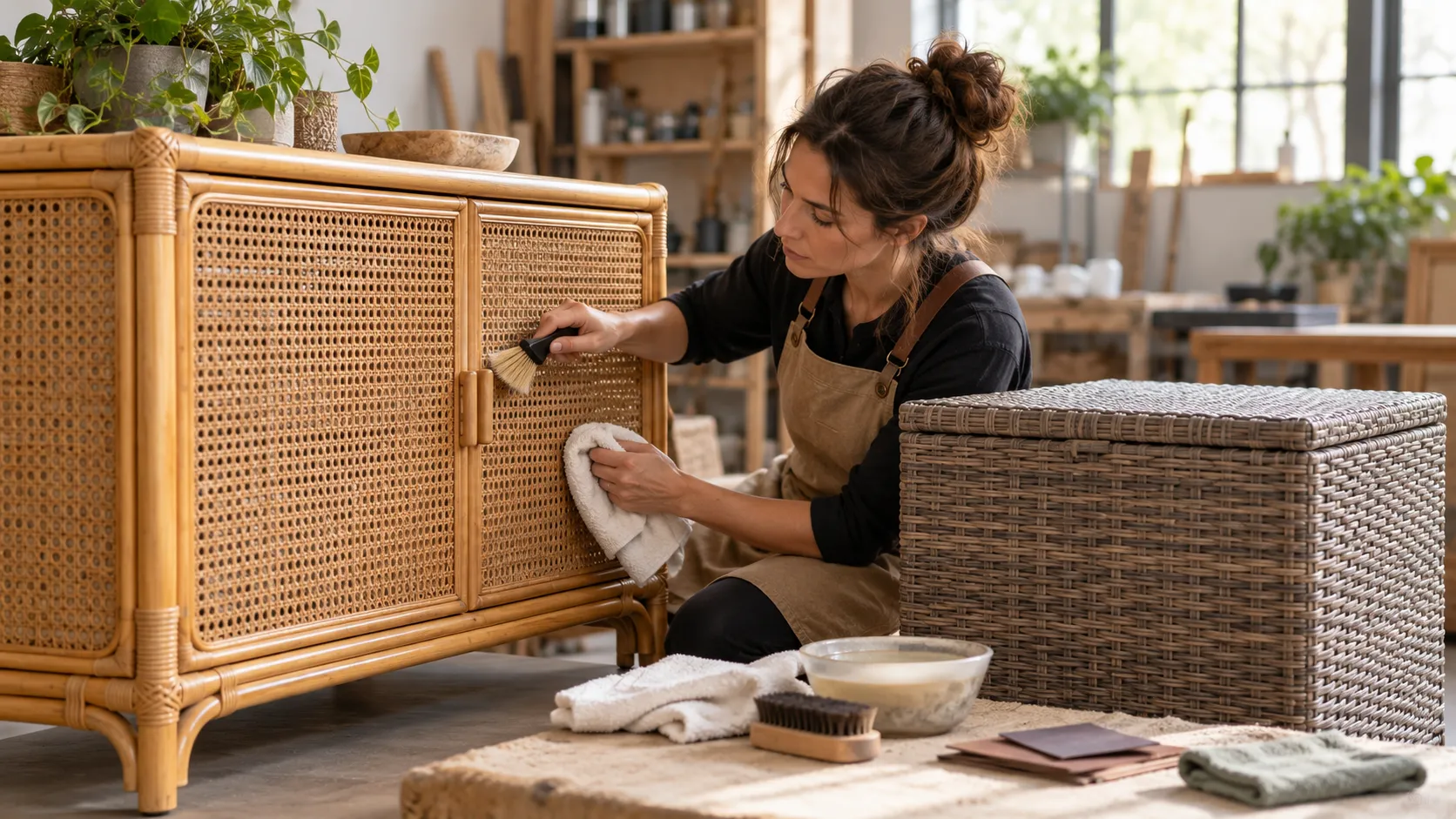
Moisture control is critical for natural rattan furniture. If the product is packed while still damp, mold, odor, discoloration, or material weakness may develop during transit.

Suppliers should ensure products are properly dried before packaging. Buyers should ask about drying process, storage condition, packaging ventilation, and desiccant use.

For long-distance export shipments, container humidity should also be considered. Container desiccants may help reduce moisture risk, especially for shipments moving through humid climates.


Stacking, Loading, and Container Space Optimization

Good packaging should protect the product while also supporting efficient container loading. Furniture is bulky, so poor packaging design can increase freight cost.

Buyers should ask suppliers for carton dimensions, loading quantity, container capacity, and stacking method. If the product is large or fragile, stacking limits should be clearly communicated.

For mixed product shipments, heavier cartons should not be placed on fragile rattan lampshades, baskets, or woven panels. The loading plan should consider weight, size, fragility, and carton strength.


Assembled vs Knock-Down Packaging

Assembled packaging means the product is shipped fully assembled. This may reduce installation work and preserve structure, but it usually requires more container space.

Knock-down packaging means the product is shipped in parts and assembled after delivery. This can improve freight efficiency, but buyers must check hardware quality, assembly instructions, and product stability after assembly.

For B2B buyers, the choice depends on product category, target market, buyer capability, and shipping cost. Retailers may prefer assembled products for convenience, while wholesalers may prefer knock-down packaging for better container efficiency.


Carton Labeling and Shipping Marks

Carton labeling and shipping marks help identify products during shipment, customs handling, warehouse receiving, and project installation.

Labels may include product code, quantity, carton number, destination, buyer name, purchase order number, handling marks, fragile marks, and “keep dry” instructions.

Clear labeling is especially important for project-based orders where products must be installed in specific hotel rooms, restaurant zones, villa units, or retail locations.


Packaging for Wholesale and Bulk Orders

Wholesale orders usually focus on consistency, efficiency, and cost control. Packaging should be strong enough for export but also practical for bulk shipment.

Buyers should confirm whether packaging is suitable for warehouse storage, retail distribution, and onward delivery to customers. If the buyer will resell products, carton appearance and labeling may also matter.

Bulk orders may benefit from standardized carton sizes and efficient loading plans. This helps reduce freight complexity and warehouse handling issues.


Packaging for Custom and Project-Based Orders

Custom and project-based rattan furniture may need special packaging because the products are often made for specific locations or design requirements.

For hotel, resort, restaurant, and villa projects, buyers may request room-by-room labeling, item codes, installation notes, or grouped packaging by project area.

Large custom pieces, oversized lampshades, special cabinets, or fragile woven panels may require reinforced cartons, crates, or custom packaging solutions.


Quality Control Before Packaging

Quality control should happen before packaging. Once products are packed, defects become harder to inspect.

Suppliers should check dimensions, material quality, weaving consistency, frame stability, finishing, color, hardware, and product cleanliness before packing.

Buyers should request pre-packaging photos or inspection reports when possible. This helps reduce the risk of receiving products that are well-packed but poorly finished.


Pre-Shipment Inspection Checklist

A pre-shipment inspection should review both product quality and packaging quality. Buyers or third-party inspectors may check sample units or full order quantities depending on order size and risk level.

Inspection points should include product dimensions, color, finish, frame strength, weaving quality, carton condition, packaging layers, labels, quantity, and loading readiness.

For export rattan furniture, packaging inspection is just as important as product inspection because poor packaging can damage good products during transit.


How Packaging Affects Freight Cost and Landed Cost

Packaging affects freight cost because carton size, product volume, and loading efficiency influence shipping space. A product with oversized packaging may cost more to ship even if the unit price is low.

Packaging also affects landed cost through damage rates. Weak packaging may reduce upfront cost but increase replacement cost, refund risk, claims, and customer dissatisfaction.

B2B buyers should evaluate packaging as part of total landed cost, not as a minor expense. Strong packaging can protect margin by reducing post-shipment problems.


Common Packaging Mistakes B2B Buyers Should Avoid

One common mistake is focusing only on product price and ignoring packaging quality. Cheap packaging can increase damage risk and create higher costs after delivery.

Another mistake is not checking carton dimensions before confirming shipment. Furniture products can be bulky, and poor packaging size can increase freight cost.

Buyers should also avoid assuming that one packaging method works for all products. Rattan chairs, tables, lampshades, baskets, cabinets, and cane webbing each require different packaging approaches.

A final mistake is skipping packaging inspection. Buyers should review packaging before shipment, especially for first orders, custom products, or fragile designs.


Final Recommendations Before Shipment

Before shipment, buyers should confirm the packaging specification in writing. This should include carton type, protection materials, moisture control, labeling, carton dimensions, loading method, and any custom requirements.

Buyers should request packaging photos or videos before the goods leave the supplier’s facility. For large orders, third-party inspection may be useful.

The best export packaging strategy balances protection, cost, and loading efficiency. Good packaging should protect the furniture without creating unnecessary freight cost.


Conclusion

Export packaging for rattan furniture is a critical part of B2B sourcing. It protects product quality, reduces shipment damage, supports warehouse handling, improves project readiness, and affects total landed cost.

Rattan chairs, tables, lampshades, baskets, cabinets, and cane webbing products each require different packaging strategies. Buyers should evaluate cartons, wrapping, foam protection, corner guards, moisture control, labeling, stacking, and container loading before confirming shipment.

For buyers exploring rattan furniture products and sourcing options, RattanTradeAsia provides a convenient place to discover products, compare suppliers, and explore solutions for different B2B requirements.

Stay Inspired

Subcribe to our insight newsletter and be the first to receive the latest article and news updates form Tradeasia

Need help or product quote?👋 Chat with Assistant!